


- Introduction
- Why Basic Thai Words Are Helpful
- Polite Words For Men And Women
- Hello In Thai
- Thank You In Thai
- Yes And No In Thai
- Excuse Me In Thai
- I Do Not Understand
- Please Help
- How Much?
- Too Expensive
- Can You Give A Discount?
- I Want This
- I Do Not Want This
- Delicious
- Not Spicy
- Very Spicy
- No Sugar
- No Ice
- Water
- Toilet
- Where Is This Place?
- Go Here, Please
- Turn Left
- Turn Right
- Go Straight
- Stop Here
- Use The Meter
- At The Hotel
- At A Restaurant
- At A Market
- At A Temple
- Numbers Visitors May Need
- Useful Words For Money
- Basic Food Words
- Useful Words For Transport
- How To Pronounce Thai Words More Easily
- Using A Translation App
- Common Mistakes To Avoid
- Simple Thai Phrase List For Visitors
- Conclusion
- FAQ
- What Are The Most Useful Thai Words For First-Time Visitors?
- How Do I Say Hello In Thai?
- How Do I Say Thank You In Thai?
- How Do I Say Excuse Me In Thai?
- How Do I Ask How Much In Thai?
- How Do I Ask For The Toilet In Thai?
- Do I Need Perfect Thai Pronunciation?
- Should I Use Krap Or Ka?
- Can I Use English In Thailand?
- What Is The Best Way To Learn Basic Thai Before A Trip?
Introduction
Thailand is a welcoming country, and visitors can enjoy the trip more by learning a few simple Thai words. You do not need to speak Thai fluently to travel well, but knowing basic greetings, polite words, food phrases, taxi phrases, and shopping words can make daily situations easier.
Thai Words For First-Time Visitors are useful in hotels, restaurants, markets, taxis, temples, shops, and small local places where English may be limited.
Even if your pronunciation is not perfect, many Thai people appreciate the effort. A smile, polite tone, and simple words can help create friendlier interactions.
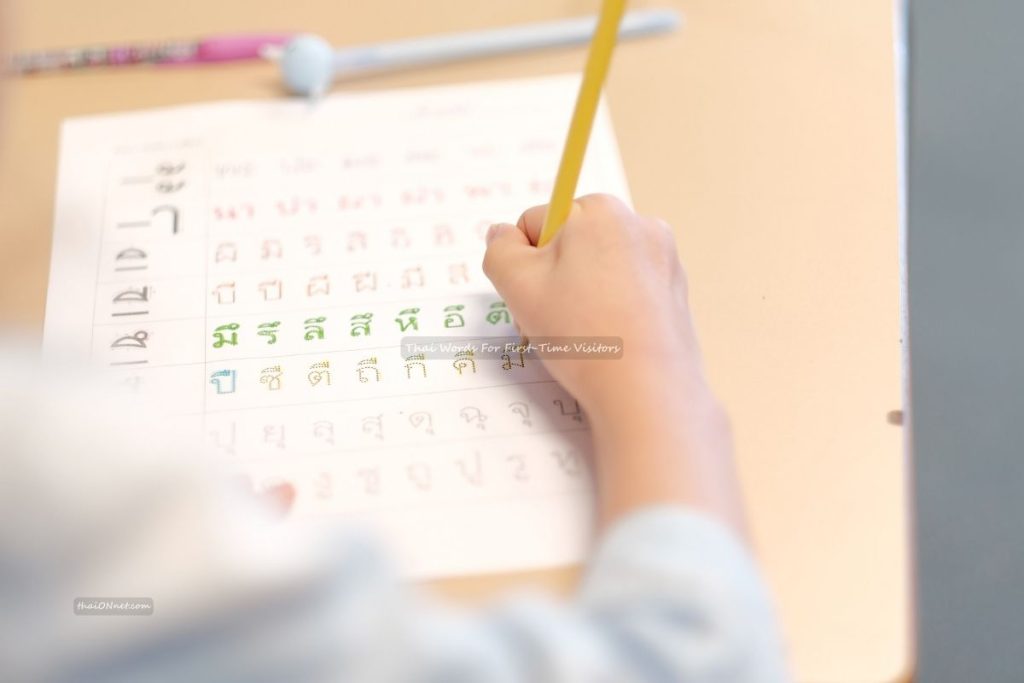
This guide gives beginner-friendly Thai words and phrases for common travel situations.
👉 “Visitors learning basic Thai words may also enjoy this guide to Family-Friendly Thai Festivals.”
Why Basic Thai Words Are Helpful
Thai Words For First-Time Visitors can help you feel more confident during simple daily moments. You may need to greet someone, say thank you, order food, ask for the toilet, tell a taxi driver where to go, or ask how much something costs.
Basic Thai words can help when:
- Ordering food
- Asking for directions
- Taking a taxi
- Shopping at markets
- Checking into hotels
- Visiting temples
- Thanking local people
- Asking for help
- Buying tickets
- Explaining simple needs
You do not need to memorise everything. Start with the words you will use most often.
Polite Words For Men And Women
Thai has polite endings that make phrases sound respectful.
Men usually end polite sentences with:
- kráp
Women usually end polite sentences with:
- kâ
For example:
- Thank you, kráp.
- Thank you, kâ.
These polite endings are used often in Thailand. They can be added to greetings, requests, and short answers.
If you are unsure, simply using a smile and a polite tone is still helpful.
Hello In Thai
Thai phrase:
- Sawatdee kráp
- Sawatdee kâ
Meaning:
- Hello
This is one of the most important Thai Words For First-Time Visitors. You can use it when meeting hotel staff, restaurant workers, shop owners, taxi drivers, or local people.
It can also be used as a polite goodbye in many situations.
Thank You In Thai
Thai phrase:
- Khop khun kráp
- Khop khun kâ
Meaning:
- Thank you
This phrase is useful every day. Use it when someone serves food, gives directions, helps with bags, takes payment, opens a door, or answers a question.
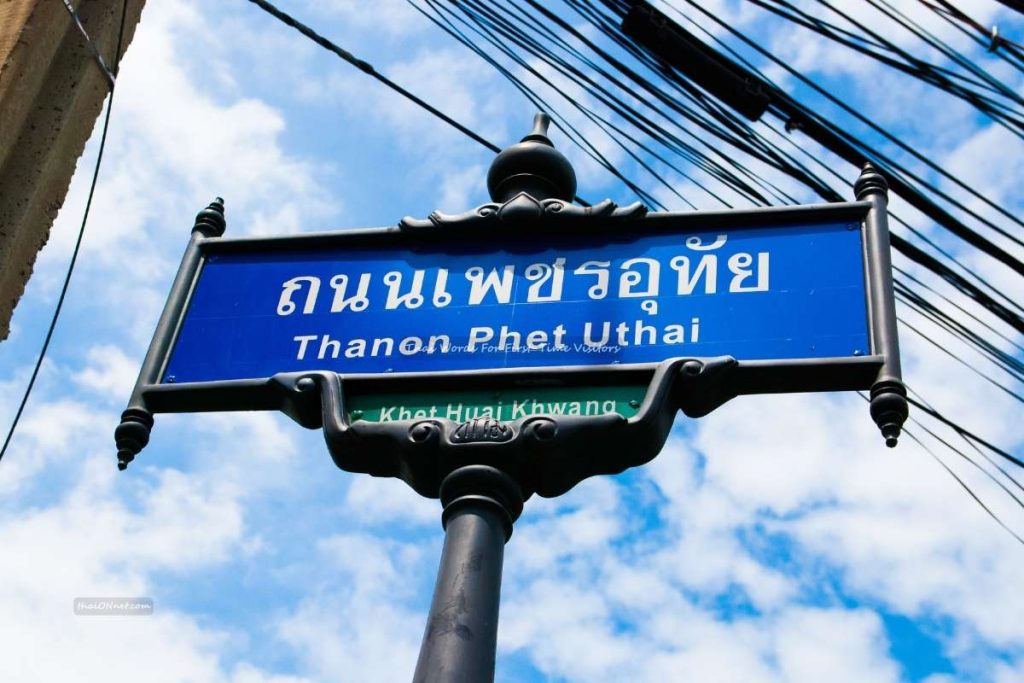
If you learn only a few Thai words, “khop khun” should be one of them.
Yes And No In Thai
Thai phrase:
- Chai kráp
- Chai kâ
Meaning:
- Yes
Thai phrase:
- Mai chai kráp
- Mai chai kâ
Meaning:
- No
These are useful when confirming prices, directions, bookings, food orders, or taxi destinations.
You can also nod or shake your head gently to support the meaning.
Excuse Me In Thai
Thai phrase:
- Khor thot kráp
- Khor thot kâ
Meaning:
- Excuse me
- Sorry
Use this when passing through a crowd, asking for attention, bumping into someone, or politely interrupting.
This is one of the most useful Thai Words For First-Time Visitors because it works in many situations.
I Do Not Understand
Thai phrase:
- Mai khao jai kráp
- Mai khao jai kâ
Meaning:
- I do not understand
Use this if someone explains something in Thai and you are confused.
You can then show a map, booking, menu, phone translation, or address.
Please Help
Thai phrase:
- Chuay noi kráp
- Chuay noi kâ
Meaning:
- Please help
This is useful if you need help with directions, a taxi, a hotel address, a ticket machine, a restaurant order, or a phone map.
Use it politely and clearly.
How Much?
Thai phrase:
- Tao rai kráp?
- Tao rai kâ?
Meaning:
- How much?
This is very useful at markets, shops, food stalls, taxis, and small local places.
You can point at an item and ask:
- Tao rai kráp?
- Tao rai kâ?
This is one of the most practical Thai Words For First-Time Visitors.
Too Expensive
Thai phrase:
- Paeng pai kráp
- Paeng pai kâ
Meaning:
- Too expensive
Use this politely if the price feels too high at a market or for a non-metered ride.
Smile and keep your tone friendly. Bargaining is better when it stays respectful.
Can You Give A Discount?
Thai phrase:
- Lot dai mai kráp?
- Lot dai mai kâ?
Meaning:
- Can you reduce the price?
This phrase can be useful at markets, but it is not suitable everywhere.
In restaurants, malls, supermarkets, and official ticket counters, prices are usually fixed.
I Want This
Thai phrase:
- Ao an nee kráp
- Ao an nee kâ
Meaning:
- I want this
Use this while pointing at food, a product, ticket, drink, or menu item.
This phrase is simple and useful when pronunciation is difficult.
I Do Not Want This
Thai phrase:
- Mai ao kráp
- Mai ao kâ
Meaning:
- I do not want it
Use this politely if someone offers something you do not want.
It can be useful at markets, tourist areas, restaurants, or transport stands.
Delicious
Thai phrase:
- Aroi kráp
- Aroi kâ
Meaning:
- Delicious
This is a friendly phrase to use after enjoying Thai food.
If a restaurant owner, cook, or local person asks how the food is, “aroi” is a nice word to say.
Not Spicy
Thai phrase:
- Mai phet kráp
- Mai phet kâ
Meaning:
- Not spicy
This is very useful when ordering food in Thailand.
If you want a little spicy, you can say:
- Phet nit noi kráp
- Phet nit noi kâ
Meaning:
- A little spicy
Food spice levels can vary, so it is still good to ask carefully.
Very Spicy
Thai phrase:
- Phet mak kráp
- Phet mak kâ
Meaning:
- Very spicy
You may hear this when someone warns you about a dish.
If you do not like spicy food, use “mai phet” before ordering.
No Sugar
Thai phrase:
- Mai sai nam tan kráp
- Mai sai nam tan kâ
Meaning:
- Do not add sugar
This can be useful for drinks, coffee, tea, smoothies, and some food orders.
Thai drinks can sometimes be sweet, so this phrase is helpful for visitors who prefer less sugar.
No Ice
Thai phrase:
- Mai sai nam khaeng kráp
- Mai sai nam khaeng kâ
Meaning:
- No ice
Use this when ordering drinks if you do not want ice.
If you want ice, you can say:
- Sai nam khaeng dai kráp
- Sai nam khaeng dai kâ
Meaning:
- Ice is okay
Water
Thai word:
- Nam
Meaning:
- Water
Useful phrase:
- Khor nam kráp
- Khor nam kâ
Meaning:
- Can I have water?
This is helpful in restaurants, cafés, hotels, and during hot days.
Toilet
Thai phrase:
- Hong nam yoo nai kráp?
- Hong nam yoo nai kâ?
Meaning:
- Where is the toilet?
This is one of the most useful Thai Words For First-Time Visitors.
“Hong nam” means toilet or bathroom.
You can use this in malls, restaurants, markets, temples, stations, and attractions.
Where Is This Place?
Thai phrase:
- Yoo tee nai kráp?
- Yoo tee nai kâ?
Meaning:
- Where is it?
You can point at a map, address, or place name and ask this phrase.
It is useful for directions, stations, toilets, hotel lobbies, markets, and nearby landmarks.
Go Here, Please
Thai phrase:
- Pai thee nee kráp
- Pai thee nee kâ
Meaning:
- Go here, please
This is very useful for taxis and ride-hailing cars. Show the driver the address or map and say this phrase.
It is easier than trying to pronounce a long place name.
Turn Left
Thai phrase:
- Liao sai kráp
- Liao sai kâ
Meaning:
- Turn left
Use this if you are helping a driver near the destination.
You can also point left to make it clearer.
Turn Right
Thai phrase:
- Liao kwaa kráp
- Liao kwaa kâ
Meaning:
- Turn right
This is useful in taxis, tuk-tuks, or when giving directions.
Go Straight
Thai phrase:
- Trong pai kráp
- Trong pai kâ
Meaning:
- Go straight
This is one of the easiest direction phrases to remember.
Use it when the driver is close to your destination.
Stop Here
Thai phrase:
- Jod trong nee kráp
- Jod trong nee kâ
Meaning:
- Stop here, please
This is very helpful in taxis, ride-hailing cars, and local transport.
Use it when you reach the right place or want to get out nearby.
Use The Meter
Thai phrase:
- Chai meter dai mai kráp?
- Chai meter dai mai kâ?
Meaning:
- Can you use the meter?
This phrase is useful when taking metered taxis.
If a driver does not want to use the meter and you are not comfortable with the price, you can choose another taxi or use a ride-hailing app.
At The Hotel
Useful hotel phrases include:
Thai phrase:
- Check-in kráp
- Check-in kâ
Meaning:
- I want to check in
Thai phrase:
- Khor key card kráp
- Khor key card kâ
Meaning:
- Can I have the key card?
Thai phrase:
- Mee Wi-Fi mai kráp?
- Mee Wi-Fi mai kâ?
Meaning:
- Is there Wi-Fi?
At hotels, many staff speak English, but simple Thai words can still be polite and friendly.
At A Restaurant
Useful restaurant phrases include:
Thai phrase:
- Khor menu kráp
- Khor menu kâ
Meaning:
- Can I have the menu?
Thai phrase:
- Khor bill kráp
- Khor bill kâ
Meaning:
- Can I have the bill?
Thai phrase:
- Mai phet kráp
- Mai phet kâ
Meaning:
- Not spicy
Thai phrase:
- Aroi kráp
- Aroi kâ
Meaning:
- Delicious
Restaurant phrases are some of the most enjoyable Thai Words For First-Time Visitors because they make food experiences easier and friendlier.
At A Market
Useful market phrases include:
Thai phrase:
- Tao rai kráp?
- Tao rai kâ?
Meaning:
- How much?
Thai phrase:
- Paeng pai kráp
- Paeng pai kâ
Meaning:
- Too expensive
Thai phrase:
- Lot dai mai kráp?
- Lot dai mai kâ?
Meaning:
- Can you reduce the price?
Thai phrase:
- Ao an nee kráp
- Ao an nee kâ
Meaning:
- I want this
Market Thai does not need to be perfect. Pointing, smiling, and using simple phrases is usually enough.
At A Temple
Temples are sacred places, so visitors should behave respectfully.
Useful words include:
Thai phrase:
- Khor thot kráp
- Khor thot kâ
Meaning:
- Excuse me
- Sorry
Thai phrase:
- Khop khun kráp
- Khop khun kâ
Meaning:
- Thank you
Thai phrase:
- Hong nam yoo nai kráp?
- Hong nam yoo nai kâ?
Meaning:
- Where is the toilet?
When visiting temples, dress modestly, speak quietly, remove shoes where required, and follow signs.
Numbers Visitors May Need
Numbers can help with prices, rooms, transport, and shopping.
Basic Thai numbers:
- Nueng: one
- Song: two
- Sam: three
- See: four
- Haa: five
- Hok: six
- Jet: seven
- Paet: eight
- Gao: nine
- Sip: ten
You do not need to learn all numbers before your trip, but knowing one to ten can help with small purchases and basic communication.
Useful Words For Money
Thai word:
- Baht
Meaning:
- Thai currency
Useful phrase:
- Tao rai baht kráp?
- Tao rai baht kâ?
Meaning:
- How many baht?
Most visitors can simply ask “tao rai?” and look at the calculator or price display.
At markets, many sellers use calculators to show prices.
Basic Food Words
Useful food words include:
- Khao: rice
- Gai: chicken
- Moo: pork
- Pla: fish
- Khai: egg
- Pak: vegetables
- Nam: water
- Cha: tea
- Kafae: coffee
- Som tam: papaya salad
- Khao pad: fried rice
- Pad Thai: Thai-style fried noodles
Food words are useful, but menus may use different spellings in English. Pointing at pictures or using translation apps can help.
Useful Words For Transport
Useful transport words include:
- Taxi: taxi
- Rot: car
- Rot bus: bus
- Rot fai: train
- Reua: boat
- Sanam bin: airport
- Rong raem: hotel
- BTS: BTS Skytrain
- MRT: MRT subway
A visitor does not need perfect pronunciation. Showing the location on a phone is often the easiest method.
How To Pronounce Thai Words More Easily
Thai is a tonal language, which means tone can change meaning. First-time visitors do not need to master tones for a short trip, but speaking slowly helps.
Helpful pronunciation tips:
- Keep phrases short
- Speak clearly
- Do not rush
- Smile politely
- Use gestures
- Show the word on your phone
- Repeat calmly if needed
- Listen to how locals say it
- Use polite endings
The goal is basic communication, not perfect Thai.
Using A Translation App
A translation app can help when basic words are not enough.
Before going out, prepare:
- Hotel address in Thai
- Destination names
- Food allergies if any
- Emergency contacts
- Common phrases
- Offline map
- Screenshots of bookings
- Important addresses
Translation apps are useful, but short Thai Words For First-Time Visitors can be faster in simple situations.
Common Mistakes To Avoid
Using The Wrong Phrase For Excuse Me
Some beginner lists use phrases that are not natural. “Khor thot” is a safer basic phrase for “excuse me” or “sorry.”
Forgetting Polite Endings
Adding “kráp” or “kâ” makes phrases more polite.
Trying To Say Long Addresses
Show the address on your phone instead of trying to pronounce every word.
Speaking Too Fast
Slow, simple speech is easier to understand.
Worrying Too Much About Mistakes
Most locals appreciate the effort. A smile helps.
Assuming Everyone Speaks English
English is common in tourist areas, but not everywhere.
Forgetting To Say Thank You
“Khop khun” is useful everywhere.
Simple Thai Phrase List For Visitors
Here is a quick list of useful Thai Words For First-Time Visitors.
- Hello: Sawatdee kráp / kâ
- Thank you: Khop khun kráp / kâ
- Excuse me or sorry: Khor thot kráp / kâ
- Yes: Chai kráp / kâ
- No: Mai chai kráp / kâ
- I do not understand: Mai khao jai kráp / kâ
- Please help: Chuay noi kráp / kâ
- How much?: Tao rai kráp / kâ?
- Too expensive: Paeng pai kráp / kâ
- I want this: Ao an nee kráp / kâ
- Not spicy: Mai phet kráp / kâ
- Delicious: Aroi kráp / kâ
- Where is the toilet?: Hong nam yoo nai kráp / kâ?
- Go here: Pai thee nee kráp / kâ
- Stop here: Jod trong nee kráp / kâ
Start with this list and use the phrases during simple daily situations.
👉 “Visitors who want more practical travel language may also find these Easy Thai Taxi Phrases For Getting Around.”
Conclusion
Thai Words For First-Time Visitors can make travel in Thailand easier, friendlier, and more respectful. Visitors do not need to speak perfect Thai. A few useful words can help with greetings, taxis, food, shopping, hotels, markets, temples, and directions.
The most useful phrases are hello, thank you, excuse me, how much, go here, stop here, not spicy, delicious, and where is the toilet.
Use polite endings, speak slowly, show addresses on your phone, and do not worry too much about mistakes.
With a small set of Thai Words For First-Time Visitors, your first trip to Thailand can feel smoother, warmer, and more connected to local life.
FAQ
What Are The Most Useful Thai Words For First-Time Visitors?
The most useful Thai Words For First-Time Visitors include “sawatdee” for hello, “khop khun” for thank you, “khor thot” for excuse me, “tao rai” for how much, and “hong nam yoo nai” for where is the toilet.
How Do I Say Hello In Thai?
Say “Sawatdee kráp” if you are male and “Sawatdee kâ” if you are female.
How Do I Say Thank You In Thai?
Say “Khop khun kráp” if you are male and “Khop khun kâ” if you are female.
How Do I Say Excuse Me In Thai?
Say “Khor thot kráp” if you are male and “Khor thot kâ” if you are female. It can mean excuse me or sorry.
How Do I Ask How Much In Thai?
Say “Tao rai kráp?” if you are male and “Tao rai kâ?” if you are female.
How Do I Ask For The Toilet In Thai?
Say “Hong nam yoo nai kráp?” if you are male and “Hong nam yoo nai kâ?” if you are female. It means “Where is the toilet?”
Do I Need Perfect Thai Pronunciation?
No. Thai pronunciation can be difficult because Thai is tonal, but first-time visitors can still communicate with simple words, gestures, maps, and a polite tone.
Should I Use Krap Or Ka?
Men usually use “kráp” at the end of polite phrases. Women usually use “kâ.” These endings make speech sound more polite.
Can I Use English In Thailand?
Yes, English is common in many tourist areas, hotels, malls, and restaurants. However, basic Thai words are still useful in taxis, markets, local restaurants, and smaller towns.
What Is The Best Way To Learn Basic Thai Before A Trip?
Start with greetings, thank you, excuse me, numbers, food words, taxi phrases, and market phrases. Practise short phrases and save important words on your phone.