






- Introduction
- Why Thai Taxi Phrases Are Useful
- Polite Words To Know First
- Saying Hello To A Taxi Driver
- Saying Thank You
- Asking To Go Somewhere
- Showing An Address
- Asking If The Driver Can Go
- Asking To Use The Meter
- Asking The Price
- Saying It Is Too Expensive
- Asking To Go Straight
- Asking To Turn Left
- Asking To Turn Right
- Asking To Stop Here
- Asking To Stop In Front
- Asking To Wait
- Asking If There Is Traffic
- Saying You Are In A Hurry
- Asking To Go Slowly
- Asking To Use The Expressway
- Asking For The Airport
- Asking For A Hotel
- Asking For A Mall
- Asking For A Train Station
- Asking For A Hospital
- Asking For Help
- Saying You Do Not Understand
- Asking If The Driver Speaks English
- Saying Yes And No
- Asking For A Receipt
- Paying The Driver
- Asking To Keep The Change
- Using A Map With Thai Taxi Phrases
- Using Ride-Hailing Apps
- Taxi Tips For Families
- Taxi Tips For Solo Travellers
- Taxi Tips For Airport Arrivals
- Common Mistakes To Avoid
- Simple Thai Taxi Phrase List
- Conclusion
- FAQ
- What Are The Most Useful Thai Taxi Phrases?
- How Do I Ask A Taxi Driver To Use The Meter In Thai?
- How Do I Say Go Here In Thai?
- How Do I Say Stop Here In Thai?
- How Do I Ask How Much In Thai?
- Should I Show The Taxi Driver A Map?
- Do Thai Taxi Drivers Speak English?
- Can I Use Thai Taxi Phrases With Ride-Hailing Apps?
- What Should I Do If The Driver Does Not Understand?
- What Is The Polite Way To Thank A Taxi Driver?
Introduction
Getting around Thailand is much easier when you know a few simple words. Taxis, ride-hailing cars, airport taxis, hotel cars, and local drivers are common in cities such as Bangkok, Chiang Mai, Phuket, Pattaya, and other busy areas.
Many drivers understand basic English, especially in tourist zones, but not all drivers do. Some may understand your destination better if you show a Thai address, a map pin, or a hotel name written in Thai.
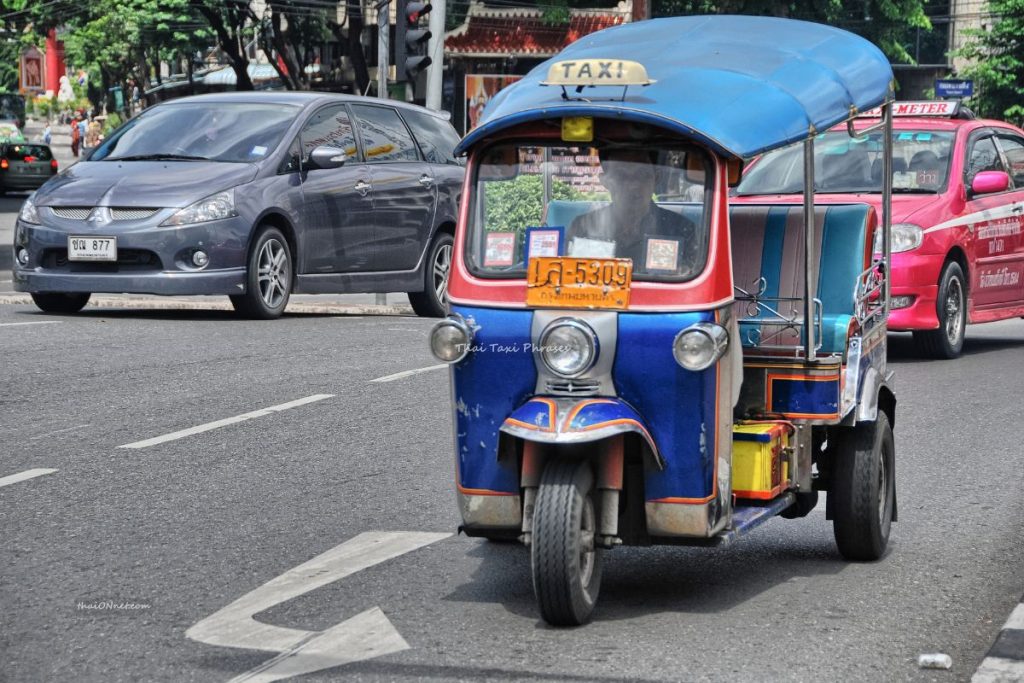
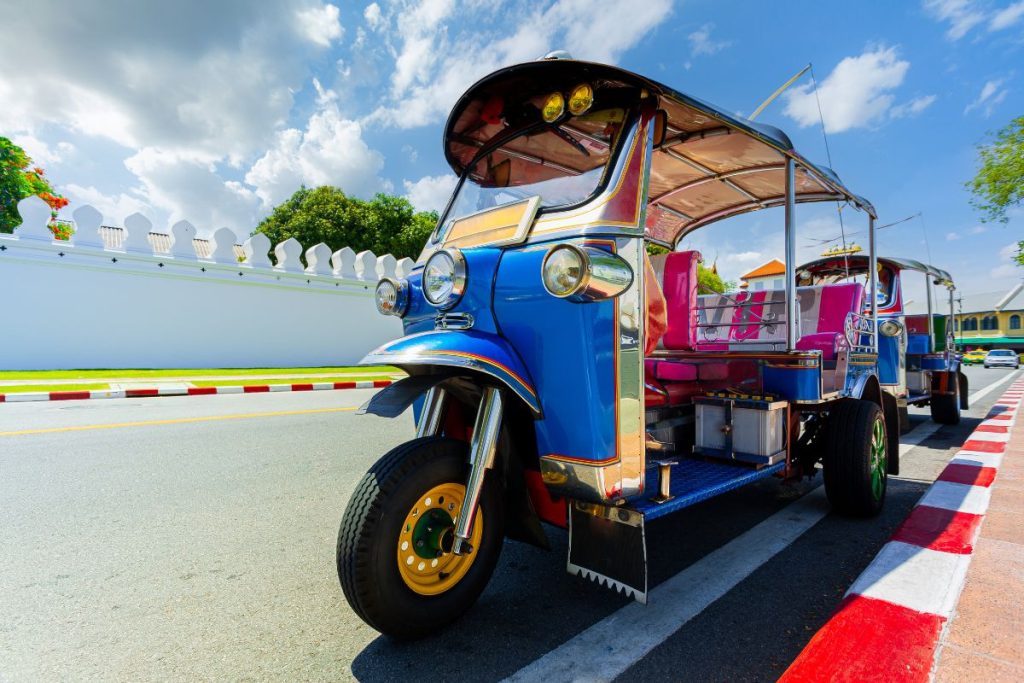
This guide shares easy Thai Taxi Phrases that visitors can use for simple taxi situations. You do not need perfect pronunciation. Even a few polite words, clear gestures, and a map can make the ride smoother.
The phrases below use simple pronunciation. Men usually add “kráp” at the end of polite sentences. Women usually add “kâ.” These polite words make Thai Taxi Phrases sound friendlier and more respectful.
👉 “Visitors learning taxi phrases may also find these Transport Tips For Everyday Travel.”
Why Thai Taxi Phrases Are Useful
Thai Taxi Phrases are useful because taxi rides often involve small details. You may need to explain where you are going, ask for the meter, confirm the price, request a stop, or tell the driver to turn left or right.
Useful phrases can help when:
- The driver does not speak much English
- Your destination has a Thai name
- You need to ask for the meter
- You want to confirm the route
- You need to stop nearby
- You want to avoid confusion
- You are travelling with children
- You are arriving at the airport
- You need help with a hotel address
- You want to be polite
Good communication does not need to be complicated. A short phrase, a map, and a calm tone are often enough.
Polite Words To Know First
Before learning Thai Taxi Phrases, it helps to know the polite endings.

Men can say:
- kráp
Women can say:
- kâ
These words do not always translate directly into English, but they make the sentence polite.
For example:
- Thank you, kráp.
- Thank you, kâ.
In Thai, this is:
- Khop khun kráp.
- Khop khun kâ.
Meaning:
- Thank you.
You can use “kráp” or “kâ” at the end of many Thai Taxi Phrases.
Saying Hello To A Taxi Driver
A simple greeting can make the ride start more politely.
Thai phrase:
- Sawatdee kráp.
- Sawatdee kâ.
Meaning:
- Hello.
You can say this when entering the taxi or speaking to the driver.
A polite greeting is not required, but it helps create a friendly tone.
Saying Thank You
This is one of the most useful Thai Taxi Phrases.
Thai phrase:
- Khop khun kráp.
- Khop khun kâ.
Meaning:
- Thank you.
Use it when the driver helps with bags, understands your destination, stops in the right place, gives change, or finishes the ride.
Even if you only learn one phrase, this is a good one.
Asking To Go Somewhere
The simplest way to tell a driver where you want to go is to say “go to” and then show the destination.
Thai phrase:
- Pai [place] kráp.
- Pai [place] kâ.
Meaning:
- Go to [place], please.
Examples:
- Pai Siam Paragon kráp.
- Pai airport kâ.
- Pai hotel nee kráp.
Meaning:
- Go to Siam Paragon, please.
- Go to the airport, please.
- Go to this hotel, please.
When using Thai Taxi Phrases for destinations, it is best to show the address on your phone too.
Showing An Address
Sometimes the easiest phrase is simple.
Thai phrase:
- Pai thee nee kráp.
- Pai thee nee kâ.
Meaning:
- Go here, please.
Use this while showing a map, hotel card, address, or phone screen.
This is one of the most practical Thai Taxi Phrases because many visitors cannot pronounce Thai place names correctly.
You can point at the address and say:
- Pai thee nee kráp.
- Pai thee nee kâ.
The driver will usually understand that you want to go to the location shown.
Asking If The Driver Can Go
Sometimes a driver may not want to go to your destination because of traffic, distance, shift change, or location.
Thai phrase:
- Pai dai mai kráp?
- Pai dai mai kâ?
Meaning:
- Can you go?
You can show your destination and ask this before entering.
Example:
- Pai airport dai mai kráp?
Meaning:
- Can you go to the airport?
This helps avoid getting in before the driver agrees.
Asking To Use The Meter
In many city taxis, using the meter is important.
Thai phrase:
- Chai meter dai mai kráp?
- Chai meter dai mai kâ?
Meaning:
- Can you use the meter?
Another simple version:
- Meter dai mai kráp?
- Meter dai mai kâ?
Meaning:
- Meter, please?
This is one of the most important Thai Taxi Phrases for visitors in Bangkok and other cities where metered taxis are common.
If the driver refuses and you are not comfortable with the quoted price, you can politely choose another taxi.
Asking The Price
If you are using a taxi without a meter, a private car, tuk-tuk, or fixed-price ride, ask the price before starting.
Thai phrase:
- Tao rai kráp?
- Tao rai kâ?
Meaning:
- How much?
You can also say:
- Pai [place], tao rai kráp?
- Pai [place], tao rai kâ?
Meaning:
- How much to go to [place]?
Agree on the price before the ride begins.
This phrase is useful for taxis, tuk-tuks, songthaews, and private transport.
Saying It Is Too Expensive
If the price feels too high, you can politely say it is expensive.
Thai phrase:
- Paeng pai kráp.
- Paeng pai kâ.
Meaning:
- Too expensive.
You can then smile and walk away if needed.
Keep the tone polite. Bargaining aggressively is not helpful.
For taxis, ride-hailing apps can also help show a price estimate.
Asking To Go Straight
Direction phrases are useful if the driver is close but needs help finding the final location.
Thai phrase:
- Trong pai kráp.
- Trong pai kâ.
Meaning:
- Go straight.
This is one of the easiest Thai Taxi Phrases to remember because it is short and often useful near hotels, condos, malls, and side streets.
Asking To Turn Left
Thai phrase:
- Liao sai kráp.
- Liao sai kâ.
Meaning:
- Turn left.
Use this when you are guiding the driver near your destination.
You can also point left to help.
Asking To Turn Right
Thai phrase:
- Liao kwaa kráp.
- Liao kwaa kâ.
Meaning:
- Turn right.
Use this with a hand gesture or map if needed.
Direction phrases are especially helpful when the taxi is close but the building entrance is not obvious.
Asking To Stop Here
This is one of the most useful Thai Taxi Phrases.
Thai phrase:
- Jod trong nee kráp.
- Jod trong nee kâ.
Meaning:
- Stop here, please.
You can also say:
- Long thee nee kráp.
- Long thee nee kâ.
Meaning:
- I will get out here.
Use this when the taxi is near the destination or when stopping at a safe place.
Asking To Stop In Front
Thai phrase:
- Jod khang naa kráp.
- Jod khang naa kâ.
Meaning:
- Stop in front, please.
This is useful if you want the taxi to stop in front of a building, hotel, mall, or entrance.
If the driver cannot stop exactly there because of traffic rules, they may stop nearby.
Asking To Wait
Thai phrase:
- Ror sak kruu kráp.
- Ror sak kruu kâ.
Meaning:
- Please wait a moment.
Use this if you need a short moment to get your bag, check the address, or call someone.
Do not use this for long waiting unless you agree with the driver first.
Asking If There Is Traffic
Thailand’s traffic can be slow, especially in Bangkok.
Thai phrase:
- Rot tit mai kráp?
- Rot tit mai kâ?
Meaning:
- Is there traffic?
“Rot tit” means traffic jam or traffic stuck.
This phrase can be useful before choosing between taxi, BTS, MRT, boat, or walking.
Saying You Are In A Hurry
Thai phrase:
- Reep kráp.
- Reep kâ.
Meaning:
- I am in a hurry.
A more polite version:
- Pom reep kráp.
- Chan reep kâ.
Meaning:
- I am in a hurry.
Use this carefully. The driver still needs to drive safely and follow traffic rules.
Asking To Go Slowly
If the driver is driving too fast or you feel uncomfortable, you can say:
Thai phrase:
- Cha cha noi kráp.
- Cha cha noi kâ.
Meaning:
- A little slower, please.
This is a useful safety phrase. Say it calmly and clearly.
Asking To Use The Expressway
In Bangkok, the expressway can sometimes save time, but tolls may be extra.
Thai phrase:
- Pai tang duan dai mai kráp?
- Pai tang duan dai mai kâ?
Meaning:
- Can we take the expressway?
The driver may ask you to pay the toll. Keep small cash ready if you agree.
You can also ask:
- Tang duan tao rai kráp?
- Tang duan tao rai kâ?
Meaning:
- How much is the expressway toll?
Asking For The Airport
Airport trips are common.
Thai phrase:
- Pai sanam bin kráp.
- Pai sanam bin kâ.
Meaning:
- Go to the airport, please.
If you need to be specific, show the airport name on your phone.
For Bangkok:
- Suvarnabhumi Airport
- Don Mueang Airport
Because pronunciation can be difficult, showing the airport name is the safest option.
Asking For A Hotel
Thai phrase:
- Pai rong raem nee kráp.
- Pai rong raem nee kâ.
Meaning:
- Go to this hotel, please.
Show the hotel name and address.
Some hotels have similar names, so it is better to show the full address, phone number, and map pin.
This is one of the most useful Thai Taxi Phrases for first-time visitors.
Asking For A Mall
Thai phrase:
- Pai haang [name] kráp.
- Pai haang [name] kâ.
Meaning:
- Go to [mall], please.
“Haang” means department store or mall in everyday speech.
Examples:
- Pai haang Siam Paragon kráp.
- Pai haang CentralWorld kâ.
Show the name on your phone if pronunciation is difficult.
Asking For A Train Station
Thai phrase:
- Pai sathanee rot fai kráp.
- Pai sathanee rot fai kâ.
Meaning:
- Go to the train station, please.
For BTS or MRT, it is better to show the station name on your phone.
You can say:
- Pai BTS [station name] kráp.
- Pai MRT [station name] kâ.
Many drivers understand BTS and MRT station names, especially in Bangkok.
Asking For A Hospital
Thai phrase:
- Pai rong phayaban kráp.
- Pai rong phayaban kâ.
Meaning:
- Go to the hospital, please.
If it is urgent, use emergency services or ask someone nearby for help. For normal transport to a hospital appointment, show the hospital name and address clearly.
Hospitals can have multiple entrances, so check the department or building name if possible.
Asking For Help
Thai phrase:
- Chuay noi kráp.
- Chuay noi kâ.
Meaning:
- Please help.
Use this if you need help with a bag, address, route, or phone map.
Another polite version:
- Chuay doo hai noi kráp.
- Chuay doo hai noi kâ.
Meaning:
- Please take a look for me.
Use this while showing your phone or address.
Saying You Do Not Understand
Thai phrase:
- Mai khao jai kráp.
- Mai khao jai kâ.
Meaning:
- I do not understand.
This is useful if the driver explains something in Thai.
You can then show your phone, map, or translation app.
Asking If The Driver Speaks English
Thai phrase:
- Pood ang-grit dai mai kráp?
- Pood ang-grit dai mai kâ?
Meaning:
- Can you speak English?
Some drivers may speak a little English. Others may not.
If the answer is no, use a map, short Thai Taxi Phrases, and simple gestures.
Saying Yes And No
Simple yes and no words are useful.
Thai phrase:
- Chai kráp.
- Chai kâ.
Meaning:
- Yes.
Thai phrase:
- Mai chai kráp.
- Mai chai kâ.
Meaning:
- No.
These words help when confirming the route, price, or destination.
Asking For A Receipt
Thai phrase:
- Khor bai set kráp.
- Khor bai set kâ.
Meaning:
- Can I have a receipt?
Not all taxis may provide one, but some airport taxis, app rides, and official services may have receipts.
This phrase is useful for business travellers or anyone tracking expenses.
Paying The Driver
When paying, you can say:
Thai phrase:
- Nee kráp.
- Nee kâ.
Meaning:
- Here you are.
If the driver gives change, say:
- Khop khun kráp.
- Khop khun kâ.
Meaning:
- Thank you.
Try to carry small notes because taxi drivers may not always have change for large bills.
Asking To Keep The Change
Thai phrase:
- Mai tong torn kráp.
- Mai tong torn kâ.
Meaning:
- No need for change.
Use this if you want to leave a small tip or the amount is close.
Tipping taxi drivers is not always required, but rounding up can be appreciated.
Using A Map With Thai Taxi Phrases
A map can be more useful than a long sentence.
Before getting into a taxi, prepare:
- Destination name
- Thai address
- Map pin
- Nearby landmark
- Hotel phone number
- Screenshot in case mobile data fails
- Building entrance if known
Then say:
- Pai thee nee kráp.
- Pai thee nee kâ.
Meaning:
- Go here, please.
Using Thai Taxi Phrases with a map is often the easiest method.
Using Ride-Hailing Apps
Ride-hailing apps can make transport easier because the destination, route, and price estimate are shown in the app.
Apps may help with:
- Clear destination
- Estimated fare
- Driver details
- Car plate number
- Route tracking
- Cashless or cash payment options, depending on the app
- Safer pickup points
- Less language confusion
Even when using an app, Thai Taxi Phrases are still useful for confirming the car, greeting the driver, saying thank you, and asking to stop nearby.
Taxi Tips For Families
Families travelling with children should plan taxi rides carefully.
Helpful tips include:
- Show the destination clearly
- Keep children seated
- Use seat belts where available
- Bring snacks and water for traffic
- Avoid rush-hour travel when possible
- Keep strollers folded before entering
- Check that bags are loaded
- Keep small cash ready
- Choose safe pickup and drop-off points
- Use ride-hailing apps when helpful
Parents can use simple Thai Taxi Phrases such as “stop here,” “go slowly,” and “go here” to make the ride easier.
Taxi Tips For Solo Travellers
Solo travellers should focus on clear communication and safety.
Useful tips include:
- Share your ride details if using an app
- Sit where you feel comfortable
- Keep your phone charged
- Follow the route on a map
- Avoid getting into unmarked vehicles
- Agree on price before non-metered rides
- Keep valuables close
- Use official taxis at airports
- Trust your instincts if something feels wrong
Simple Thai Taxi Phrases can help, but safety and awareness are also important.
Taxi Tips For Airport Arrivals
Airport taxi rides are often the first transport experience in Thailand.
Before leaving the airport, check:
- Official taxi queue
- Destination address
- Hotel phone number
- Cash for tolls if needed
- Small notes
- Ride-hailing pickup point if using an app
- Terminal name for return trips
- Airport name if Bangkok has more than one option
Use clear phrases such as:
- Pai rong raem nee kráp.
- Pai rong raem nee kâ.
Meaning:
- Go to this hotel, please.
Show the hotel address on your phone or booking confirmation.
Common Mistakes To Avoid
Getting In Before Confirming The Destination
Show the destination first and ask if the driver can go.
Not Asking For The Meter
If using a metered taxi, ask politely before the ride starts.
Relying Only On English
Some drivers may not understand English place names. Show the Thai address or map.
Carrying Only Large Bills
Small cash makes payment easier.
Forgetting Traffic Time
Traffic can add time, especially in Bangkok.
Not Checking The Final Drop-Off Point
Some destinations have multiple entrances. Use the map near the end of the ride.
Being Impatient
Calm, polite communication usually works better than frustration.
Simple Thai Taxi Phrase List
Here is a quick list of useful Thai Taxi Phrases.
- Hello: Sawatdee kráp / kâ
- Thank you: Khop khun kráp / kâ
- Go here: Pai thee nee kráp / kâ
- Can you go?: Pai dai mai kráp / kâ?
- Use the meter?: Chai meter dai mai kráp / kâ?
- How much?: Tao rai kráp / kâ?
- Too expensive: Paeng pai kráp / kâ
- Go straight: Trong pai kráp / kâ
- Turn left: Liao sai kráp / kâ
- Turn right: Liao kwaa kráp / kâ
- Stop here: Jod trong nee kráp / kâ
- Wait a moment: Ror sak kruu kráp / kâ
- I do not understand: Mai khao jai kráp / kâ
- Please help: Chuay noi kráp / kâ
- No need for change: Mai tong torn kráp / kâ
You do not need to memorise everything. Start with the phrases you are most likely to use.
👉 “For more everyday language help, readers may also review these Basic Thai Words For First-Time Visitors.”
Conclusion
Thai Taxi Phrases can make getting around Thailand easier, calmer, and more polite. Visitors do not need perfect Thai to communicate with a taxi driver. A few short phrases, a map, a Thai address, and a respectful tone can help a lot.
The most useful phrases are “go here,” “use the meter,” “how much,” “go straight,” “turn left,” “turn right,” “stop here,” and “thank you.”
When using taxis in Thailand, prepare your destination before the ride, keep small cash ready, check the meter or price, follow the route if needed, and stay patient in traffic.
With simple Thai Taxi Phrases and practical planning, getting around Thailand becomes much easier for visitors, families, solo travellers, and expats.
FAQ
What Are The Most Useful Thai Taxi Phrases?
The most useful Thai Taxi Phrases include “Pai thee nee” for “go here,” “Chai meter dai mai?” for “can you use the meter?” and “Jod trong nee” for “stop here.”
How Do I Ask A Taxi Driver To Use The Meter In Thai?
You can say “Chai meter dai mai kráp?” if you are male or “Chai meter dai mai kâ?” if you are female. It means “Can you use the meter?”
How Do I Say Go Here In Thai?
You can say “Pai thee nee kráp” or “Pai thee nee kâ” while showing the address or map. It means “Go here, please.”
How Do I Say Stop Here In Thai?
You can say “Jod trong nee kráp” or “Jod trong nee kâ.” It means “Stop here, please.”
How Do I Ask How Much In Thai?
You can say “Tao rai kráp?” or “Tao rai kâ?” This means “How much?”
Should I Show The Taxi Driver A Map?
Yes. Showing a map, Thai address, hotel card, or screenshot is often the easiest way to avoid confusion.
Do Thai Taxi Drivers Speak English?
Some taxi drivers speak basic English, especially in tourist areas, but many do not. Simple Thai Taxi Phrases can help.
Can I Use Thai Taxi Phrases With Ride-Hailing Apps?
Yes. Even with apps, Thai Taxi Phrases are useful for greeting the driver, confirming the destination, asking to stop, and saying thank you.
What Should I Do If The Driver Does Not Understand?
Stay calm, show your map or address, use simple phrases, and try a translation app if needed.
What Is The Polite Way To Thank A Taxi Driver?
Say “Khop khun kráp” if you are male or “Khop khun kâ” if you are female. It means “Thank you.”