


- Introduction
- Why Thai Phrases Help Families
- Polite Endings For Parents And Children
- Hello
- Thank You
- Excuse Me Or Sorry
- Please Help
- I Do Not Understand
- Yes And No
- Asking For The Toilet
- Asking For Water
- Asking For No Ice
- Asking For No Sugar
- Ordering Food For Children
- Asking For Food Not To Be Spicy
- Asking If Food Is Spicy
- Child-Friendly Food Words
- Delicious
- Asking For The Bill
- Asking For A Spoon And Fork
- Asking For A Plate Or Bowl
- Asking For Tissues
- Taxi Phrase For Families
- Asking A Taxi To Stop Here
- Asking A Taxi To Go Slowly
- Asking To Use The Meter
- Asking Where Something Is
- Shopping Phrases For Families
- Asking How Much
- Asking For A Bag
- Family Hotel Phrases
- Asking For A Family Room
- Saying There Is A Child
- Saying The Child Is Tired
- Saying The Child Is Hungry
- Saying The Child Is Sick
- Asking For A Hospital
- Asking For A Pharmacy
- Temple Phrases And Family Etiquette
- Teaching Children Simple Thai
- Useful Thai Numbers For Families
- Using A Translation App With Children
- Family Safety Phrases
- Common Mistakes To Avoid
- Quick Family Phrase List
- Conclusion
- FAQ
- What Are The Most Useful Thai Phrases For Families Visiting Thailand?
- How Do Children Say Thank You In Thai?
- How Do I Ask For The Toilet In Thai?
- How Do I Say Not Spicy For Children?
- How Do I Ask For Water In Thai?
- How Do I Tell A Taxi Driver To Go Here?
- How Do I Say My Child Is Tired In Thai?
- How Do I Say My Child Is Not Well In Thai?
- Should Families Use Translation Apps In Thailand?
- Do Families Need To Speak Thai To Travel In Thailand?
Introduction
Travelling to Thailand with children can be exciting, fun, and memorable. Families can enjoy beaches, temples, markets, food courts, parks, shopping malls, cafés, indoor play areas, cultural attractions, and relaxed local experiences.
However, family travel also brings practical needs. Parents may need to ask for the toilet, order non-spicy food, explain that a child is tired, ask for water, request help, tell a taxi driver where to go, or thank someone politely.
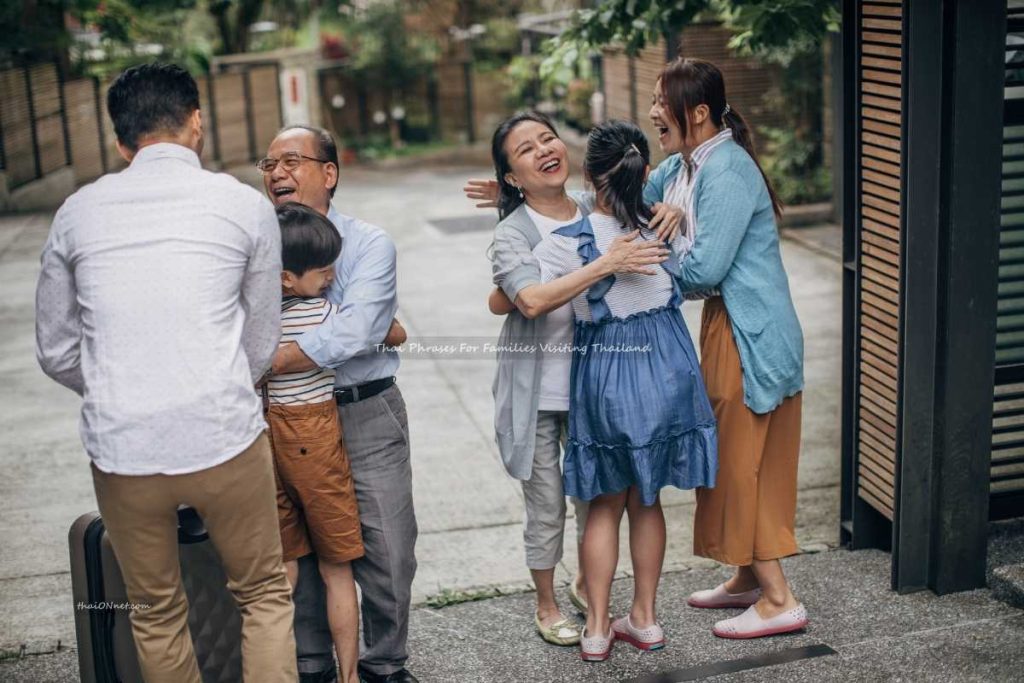
Thai Phrases For Families Visiting Thailand can make these everyday situations easier. You do not need to speak perfect Thai. A few simple phrases, a smile, polite endings, and a phone map can help a lot.
This guide focuses on useful Thai phrases for parents, children, and family travellers.
👉 “Families learning useful Thai phrases may also enjoy this guide to Floating Markets with Kids in Thailand.”
Why Thai Phrases Help Families
Thai Phrases For Families Visiting Thailand are useful because families often need quick, clear communication. Children may be hungry, tired, hot, thirsty, or in need of a toilet. Parents may need to ask for simple help in restaurants, hotels, taxis, shops, and public places.
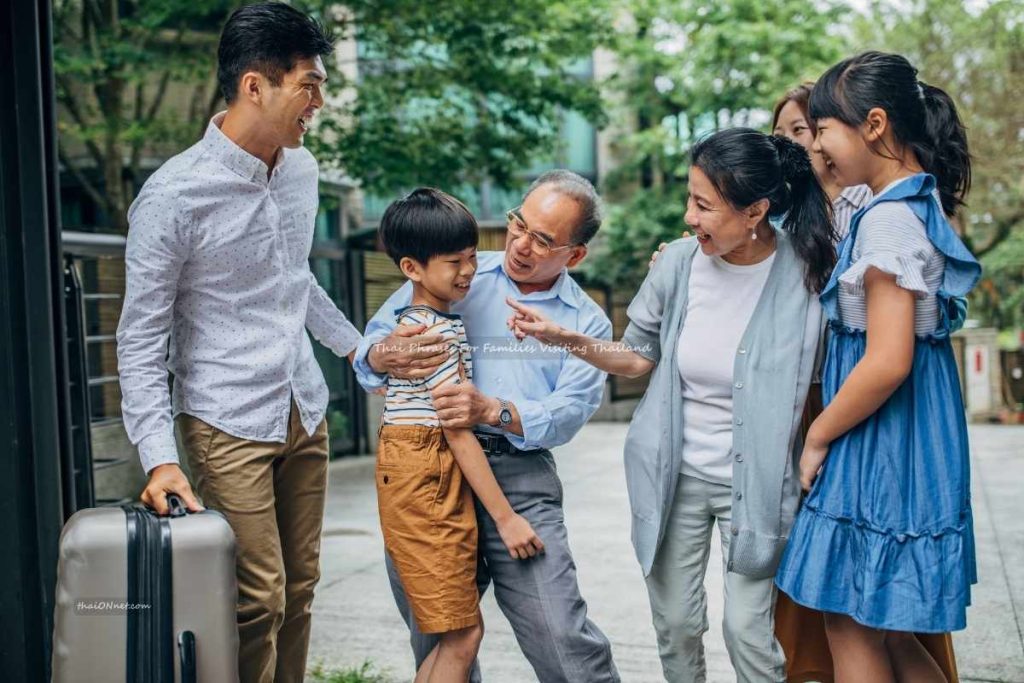
Useful family travel phrases can help with:
- Greeting local people
- Saying thank you
- Asking for the toilet
- Ordering food for children
- Asking for food not to be spicy
- Getting water
- Taking taxis
- Asking for help
- Shopping for basic items
- Explaining child needs
- Speaking politely at hotels
- Visiting temples respectfully
Even if local people speak English, using some Thai can make the interaction warmer and more respectful.
Polite Endings For Parents And Children
Thai uses polite endings that make phrases sound respectful.
Men usually say:
- kráp
Women usually say:
- kâ
Children can also use these endings when speaking politely.
For example:
- Sawatdee kráp
- Sawatdee kâ
Meaning:
- Hello
Another example:
- Khop khun kráp
- Khop khun kâ
Meaning:
- Thank you
Parents can teach children that adding “kráp” or “kâ” makes Thai phrases more polite.
Hello
Thai phrase:
- Sawatdee kráp
- Sawatdee kâ
Meaning:
- Hello
This is one of the easiest Thai Phrases For Families Visiting Thailand. Use it when greeting hotel staff, restaurant workers, taxi drivers, shopkeepers, or local people.
Children can practise saying “sawatdee” with a smile.
In many situations, “sawatdee” can also be used as goodbye.
Thank You
Thai phrase:
- Khop khun kráp
- Khop khun kâ
Meaning:
- Thank you
This is one of the most important phrases for families. Children can use it after receiving food, help, change, directions, or a small kindness.
Parents can teach children to say:
- Khop khun kráp.
- Khop khun kâ.
It is simple, polite, and useful every day.
Excuse Me Or Sorry
Thai phrase:
- Khor thot kráp
- Khor thot kâ
Meaning:
- Excuse me
- Sorry
Families can use this phrase when passing through a crowd, asking for attention, apologising for a small accident, or moving around a busy market.
It is also useful when children bump into someone or parents need to ask a question politely.
Please Help
Thai phrase:
- Chuay noi kráp
- Chuay noi kâ
Meaning:
- Please help
This is one of the most useful Thai Phrases For Families Visiting Thailand because parents may need help quickly.
Use it if you need help with:
- Directions
- A taxi
- A lost item
- A child’s need
- A hotel issue
- A restaurant question
- A stroller
- A phone map
- A medical situation
For serious problems, ask hotel staff, security, police, medical staff, or nearby adults for help.
I Do Not Understand
Thai phrase:
- Mai khao jai kráp
- Mai khao jai kâ
Meaning:
- I do not understand
Use this if someone explains something in Thai and you are confused.
You can then show your phone, map, hotel address, booking, menu, or translation app.
This phrase is helpful for parents who need clear information.
Yes And No
Thai phrase:
- Chai kráp
- Chai kâ
Meaning:
- Yes
Thai phrase:
- Mai chai kráp
- Mai chai kâ
Meaning:
- No
These short words help when confirming orders, prices, taxi destinations, hotel details, or simple questions.
Children can learn them easily too.
Asking For The Toilet
Thai phrase:
- Hong nam yoo nai kráp?
- Hong nam yoo nai kâ?
Meaning:
- Where is the toilet?
This is one of the most important Thai Phrases For Families Visiting Thailand.
Children often need the bathroom quickly, so parents should save this phrase before travelling.
“Hong nam” means toilet or bathroom.
Use it in malls, restaurants, temples, parks, markets, stations, and attractions.
Asking For Water
Thai phrase:
- Khor nam kráp
- Khor nam kâ
Meaning:
- Can I have water?
Water is important in Thailand’s heat.
If you want bottled water, say:
- Khor nam khuat kráp
- Khor nam khuat kâ
Meaning:
- Can I have bottled water?
This phrase is useful in restaurants, cafés, hotels, shops, and food courts.
Asking For No Ice
Thai phrase:
- Mai sai nam khaeng kráp
- Mai sai nam khaeng kâ
Meaning:
- No ice
Use this when ordering drinks for children or family members who prefer no ice.
“Nam khaeng” means ice.
Asking For No Sugar
Thai phrase:
- Mai sai nam tan kráp
- Mai sai nam tan kâ
Meaning:
- Do not add sugar
Thai drinks can sometimes be sweet. Parents may use this phrase when ordering juice, tea, coffee, smoothies, or children’s drinks.
If you want less sweet, say:
- Waan noi kráp
- Waan noi kâ
Meaning:
- Less sweet
Ordering Food For Children
Thai phrase:
- Ao an nee kráp
- Ao an nee kâ
Meaning:
- I want this
Use this while pointing at a menu item, food picture, or food display.
This is one of the easiest Thai Phrases For Families Visiting Thailand because you do not need to know the dish name.
For children, parents can point to simple foods and say:
- Ao an nee kráp.
- Ao an nee kâ.
Asking For Food Not To Be Spicy
Thai phrase:
- Mai phet kráp
- Mai phet kâ
Meaning:
- Not spicy
This is very important for families because many Thai dishes can be spicy.
Use it before ordering food for children.
You can also say:
- Phet nit noi kráp
- Phet nit noi kâ
Meaning:
- A little spicy
For young children, “mai phet” is usually safer.
Asking If Food Is Spicy
Thai phrase:
- Phet mai kráp?
- Phet mai kâ?
Meaning:
- Is it spicy?
This phrase is useful when choosing food at restaurants, food courts, markets, and street food stalls.
If staff say “phet,” the dish may be spicy.
If you are unsure, choose a simpler dish or ask for “mai phet.”
Child-Friendly Food Words
Useful food words for families include:
- Rice: khao
- Fried rice: khao pad
- Chicken: gai
- Egg: khai
- Pork: moo
- Fish: pla
- Noodles: guay tiew
- Soup: tom
- Water: nam
- Milk: nom
- Banana: gluay
- Fruit: phon la mai
- Not spicy: mai phet
- Delicious: aroi
Simple dishes such as fried rice, omelette, rice, soup, noodles, grilled chicken, and fruit may be easier for children.
Delicious
Thai phrase:
- Aroi kráp
- Aroi kâ
Meaning:
- Delicious
Children can use this phrase after enjoying food.
If the food is very delicious, say:
- Aroi mak kráp
- Aroi mak kâ
Meaning:
- Very delicious
This is a friendly phrase that often makes restaurant staff smile.
Asking For The Bill
Thai phrase:
- Khor bill kráp
- Khor bill kâ
Meaning:
- Can I have the bill?
This is useful in restaurants and cafés.
At food courts or street food stalls, you may pay before eating or at the counter.
Asking For A Spoon And Fork
Thai phrase:
- Khor chon gap som kráp
- Khor chon gap som kâ
Meaning:
- Can I have a spoon and fork?
Many Thai dishes are eaten with a spoon and fork.
Families may need extra cutlery for children.
Asking For A Plate Or Bowl
Thai phrase:
- Khor jaan kráp
- Khor jaan kâ
Meaning:
- Can I have a plate?
Thai phrase:
- Khor thuay kráp
- Khor thuay kâ
Meaning:
- Can I have a bowl?
These phrases are useful when sharing food with children.
Asking For Tissues
Thai phrase:
- Khor tissue kráp
- Khor tissue kâ
Meaning:
- Can I have a tissue?
This is useful at restaurants, food courts, markets, cafés, and street food stalls.
Families with children may use this phrase often.
Taxi Phrase For Families
Thai phrase:
- Pai thee nee kráp
- Pai thee nee kâ
Meaning:
- Go here, please
Use this while showing the driver a map, hotel address, attraction, hospital, or restaurant.
This is one of the most practical Thai Phrases For Families Visiting Thailand because it avoids pronunciation problems.
Asking A Taxi To Stop Here
Thai phrase:
- Jod trong nee kráp
- Jod trong nee kâ
Meaning:
- Stop here, please
Use this when you reach the hotel, restaurant, mall, attraction, or safe drop-off point.
Asking A Taxi To Go Slowly
Thai phrase:
- Cha cha noi kráp
- Cha cha noi kâ
Meaning:
- A little slower, please
This phrase can help if you feel the ride is too fast or uncomfortable.
Say it calmly and politely.
Asking To Use The Meter
Thai phrase:
- Chai meter dai mai kráp?
- Chai meter dai mai kâ?
Meaning:
- Can you use the meter?
This is useful for metered taxis.
Families may also use ride-hailing apps to reduce language confusion and show the route clearly.
Asking Where Something Is
Thai phrase:
- Yoo tee nai kráp?
- Yoo tee nai kâ?
Meaning:
- Where is it?
You can point at a map, ticket, hotel name, shop, station, or place name and ask this phrase.
It is useful in malls, stations, attractions, hotels, and markets.
Shopping Phrases For Families
Useful shopping phrases include:
- Tao rai kráp / kâ?: How much?
- Ao an nee kráp / kâ: I want this.
- Mai ao kráp / kâ: I do not want it.
- Khor thung kráp / kâ: Can I have a bag?
- Khop khun kráp / kâ: Thank you.
These phrases help when buying snacks, children’s clothes, toys, souvenirs, water, sunscreen, or small travel items.
Asking How Much
Thai phrase:
- Tao rai kráp?
- Tao rai kâ?
Meaning:
- How much?
Use this in markets, small shops, food stalls, taxis, and souvenir stands.
The seller may answer in Thai or show the price on a calculator.
Asking For A Bag
Thai phrase:
- Khor thung kráp
- Khor thung kâ
Meaning:
- Can I have a bag?
This is useful when buying snacks, children’s items, clothes, drinks, or souvenirs.
Family Hotel Phrases
Useful hotel phrases include:
- Sawatdee kráp / kâ: Hello
- Khop khun kráp / kâ: Thank you
- Mee Wi-Fi mai kráp / kâ?: Is there Wi-Fi?
- Khor key card kráp / kâ: Can I have the key card?
- Hong nam yoo nai kráp / kâ?: Where is the bathroom?
At hotels in tourist areas, staff often speak English, but simple Thai phrases still sound polite.
Asking For A Family Room
Thai phrase:
- Mee hong samrap khrop khrua mai kráp?
- Mee hong samrap khrop khrua mai kâ?
Meaning:
- Do you have a room for a family?
“Khrop khrua” means family.
This phrase may be useful at smaller hotels or guesthouses, but showing your booking details is usually easiest.
Saying There Is A Child
Thai phrase:
- Mee dek kráp
- Mee dek kâ
Meaning:
- There is a child.
This may help when asking about seats, meals, family rooms, tours, or safety needs.
“Dek” means child.
Saying The Child Is Tired
Thai phrase:
- Dek nueai kráp
- Dek nueai kâ
Meaning:
- The child is tired.
This phrase may be useful if you need to explain why your family needs to sit, stop, return to the hotel, or take a break.
Saying The Child Is Hungry
Thai phrase:
- Dek hiw kráp
- Dek hiw kâ
Meaning:
- The child is hungry.
This may help in restaurants, food courts, tours, or family activities.
Saying The Child Is Sick
Thai phrase:
- Dek mai sabai kráp
- Dek mai sabai kâ
Meaning:
- The child is not well.
For anything serious, ask for medical help quickly.
You can also say:
- Pai rong phayaban kráp
- Pai rong phayaban kâ
Meaning:
- Go to the hospital, please.
Asking For A Hospital
Thai phrase:
- Rong phayaban yoo tee nai kráp?
- Rong phayaban yoo tee nai kâ?
Meaning:
- Where is the hospital?
This is a useful phrase for families, but in urgent situations it is better to ask hotel staff, security, or local authorities for immediate help.
Asking For A Pharmacy
Thai phrase:
- Raan yaa yoo tee nai kráp?
- Raan yaa yoo tee nai kâ?
Meaning:
- Where is the pharmacy?
“Raan yaa” means pharmacy.
This can be useful for small family needs, but for serious symptoms, seek medical care.
Temple Phrases And Family Etiquette
When visiting temples with children, respectful behaviour is important.
Useful phrases include:
- Sawatdee kráp / kâ: Hello
- Khor thot kráp / kâ: Excuse me or sorry
- Khop khun kráp / kâ: Thank you
- Hong nam yoo nai kráp / kâ?: Where is the toilet?
Family temple tips:
- Dress modestly
- Keep children calm
- Remove shoes where required
- Speak quietly
- Do not touch sacred objects
- Avoid climbing on temple structures
- Follow signs
- Ask before taking close photos
Thai phrases are helpful, but respectful behaviour matters most.
Teaching Children Simple Thai
Children do not need to learn many phrases. Start with a small set.
Good phrases for children include:
- Sawatdee kráp / kâ: Hello
- Khop khun kráp / kâ: Thank you
- Khor thot kráp / kâ: Excuse me or sorry
- Aroi kráp / kâ: Delicious
- Nam: Water
- Hong nam: Toilet
- Mai phet: Not spicy
Make it fun and simple. Children may enjoy repeating phrases at restaurants, hotels, and markets.
Useful Thai Numbers For Families
Numbers can help with food, tickets, shopping, and taxis.
- One: nueng
- Two: song
- Three: sam
- Four: see
- Five: haa
- Six: hok
- Seven: jet
- Eight: paet
- Nine: gao
- Ten: sip
Families can use numbers when ordering drinks, buying tickets, asking for portions, or counting children.
Using A Translation App With Children
A translation app can help when simple phrases are not enough.
Before going out, save:
- Hotel address in Thai
- Child allergy notes
- Important medical phrases
- Taxi destination
- Emergency contacts
- Common family phrases
- Restaurant phrases
- Offline maps
- Attraction names
Thai Phrases For Families Visiting Thailand are useful, but a phone can support communication in more detailed situations.
Family Safety Phrases
Useful safety phrases include:
- Chuay noi kráp / kâ: Please help.
- Dek hai kráp / kâ: The child is missing.
- Rong phayaban yoo tee nai kráp / kâ?: Where is the hospital?
- Raan yaa yoo tee nai kráp / kâ?: Where is the pharmacy?
- Mai khao jai kráp / kâ: I do not understand.
For serious emergencies, ask nearby staff or authorities for immediate help.
Common Mistakes To Avoid
Learning Unnatural Phrases
Some beginner phrase lists include phrases that are not commonly used. Start with simple phrases such as “sawatdee,” “khop khun,” “khor thot,” “mai phet,” and “hong nam.”
Forgetting Polite Endings
“Kráp” and “kâ” make speech more polite.
Expecting Children To Memorise Too Much
Teach children only a few useful words.
Not Learning Toilet Phrases
Families often need bathroom phrases quickly.
Forgetting Not Spicy
“Mai phet” is very useful when ordering food for children.
Relying Only On English
English is common in tourist areas, but not everywhere.
Forgetting To Show A Map
Maps and screenshots make taxi communication much easier.
Quick Family Phrase List
Here is a simple list of Thai Phrases For Families Visiting Thailand.
- Hello: Sawatdee kráp / kâ
- Thank you: Khop khun kráp / kâ
- Excuse me or sorry: Khor thot kráp / kâ
- Please help: Chuay noi kráp / kâ
- I do not understand: Mai khao jai kráp / kâ
- How much?: Tao rai kráp / kâ?
- I want this: Ao an nee kráp / kâ
- Not spicy: Mai phet kráp / kâ
- Can I have water?: Khor nam kráp / kâ
- Where is the toilet?: Hong nam yoo nai kráp / kâ?
- Go here: Pai thee nee kráp / kâ
- Stop here: Jod trong nee kráp / kâ
- The child is tired: Dek nueai kráp / kâ
- The child is hungry: Dek hiw kráp / kâ
- The child is not well: Dek mai sabai kráp / kâ
Save this list on your phone before travelling.
👉 “Families preparing for practical situations may also want to review these Thai Hospital Phrases For Visitors.”
Conclusion
Thai Phrases For Families Visiting Thailand can make family travel easier, calmer, and more respectful. Parents do not need to speak fluent Thai. A few practical phrases can help with restaurants, taxis, toilets, hotels, shopping, temples, and asking for help.
The most useful family phrases include hello, thank you, excuse me, please help, not spicy, where is the toilet, go here, stop here, and the child is not well.
Teach children a few simple words, use polite endings, speak slowly, and keep important addresses saved on your phone.
With simple Thai Phrases For Families Visiting Thailand, families can enjoy daily life in Thailand with more confidence and connection.
FAQ
What Are The Most Useful Thai Phrases For Families Visiting Thailand?
The most useful Thai Phrases For Families Visiting Thailand include “sawatdee” for hello, “khop khun” for thank you, “mai phet” for not spicy, “hong nam yoo nai” for where is the toilet, and “chuay noi” for please help.
How Do Children Say Thank You In Thai?
Children can say “Khop khun kráp” if they are boys and “Khop khun kâ” if they are girls.
How Do I Ask For The Toilet In Thai?
Say “Hong nam yoo nai kráp?” if you are male and “Hong nam yoo nai kâ?” if you are female. It means “Where is the toilet?”
How Do I Say Not Spicy For Children?
Say “Mai phet kráp” if you are male and “Mai phet kâ” if you are female. It means “not spicy.”
How Do I Ask For Water In Thai?
Say “Khor nam kráp” if you are male and “Khor nam kâ” if you are female. It means “Can I have water?”
How Do I Tell A Taxi Driver To Go Here?
Say “Pai thee nee kráp” if you are male and “Pai thee nee kâ” if you are female while showing the map or address.
How Do I Say My Child Is Tired In Thai?
Say “Dek nueai kráp” if you are male and “Dek nueai kâ” if you are female. It means “The child is tired.”
How Do I Say My Child Is Not Well In Thai?
Say “Dek mai sabai kráp” if you are male and “Dek mai sabai kâ” if you are female. It means “The child is not well.”
Should Families Use Translation Apps In Thailand?
Yes. Translation apps can help with detailed communication, but basic Thai phrases are faster for simple situations like food, taxis, toilets, and thank you.
Do Families Need To Speak Thai To Travel In Thailand?
No. Many tourist areas use English, but learning a few Thai phrases makes family travel easier and more respectful.