



- Intrduction
- Why Shopping Phrases Are Useful In Thailand
- Polite Endings For Shopping
- Hello In A Shop
- Thank You
- Excuse Me
- How Much?
- What Is The Price?
- I Want This
- I Do Not Want It
- I Am Just Looking
- Too Expensive
- Can You Reduce The Price?
- Can You Make It Cheaper?
- I Will Take It
- I Will Not Take It
- Do You Have This?
- Do You Have Another One?
- Do You Have A New One?
- Do You Have A Bag?
- Can I Have A Bag?
- Can I Have A Receipt?
- Can I Pay By Card?
- Cash Only?
- Do You Accept QR Payment?
- Do You Have My Size?
- Bigger Size
- Smaller Size
- Can I Try It On?
- Where Is The Fitting Room?
- Do You Have Another Colour?
- Basic Colours In Thai
- This Colour
- Do You Have A Different Design?
- Good Quality?
- Is It Real?
- Useful Thai Numbers For Shopping
- Shopping At Local Markets
- Shopping At Night Markets
- Shopping In Malls
- Shopping For Food
- Shopping For Clothes
- Shopping For Souvenirs
- Polite Bargaining Tips
- When Not To Bargain
- Shopping Safety Tips
- Common Mistakes To Avoid
- Simple Shopping Phrase List
- Conclusion
- FAQ
- What Are The Most Useful Basic Thai Shopping Phrases?
- How Do I Ask How Much In Thai?
- How Do I Say I Want This In Thai?
- How Do I Ask For A Discount In Thai?
- Can I Bargain In Thai Markets?
- Can I Bargain In Thai Malls?
- How Do I Ask If I Can Pay By Card?
- How Do I Ask For A Bag In Thai?
- How Do I Ask For A Receipt In Thai?
- Do I Need Perfect Thai Pronunciation For Shopping?
Intrduction
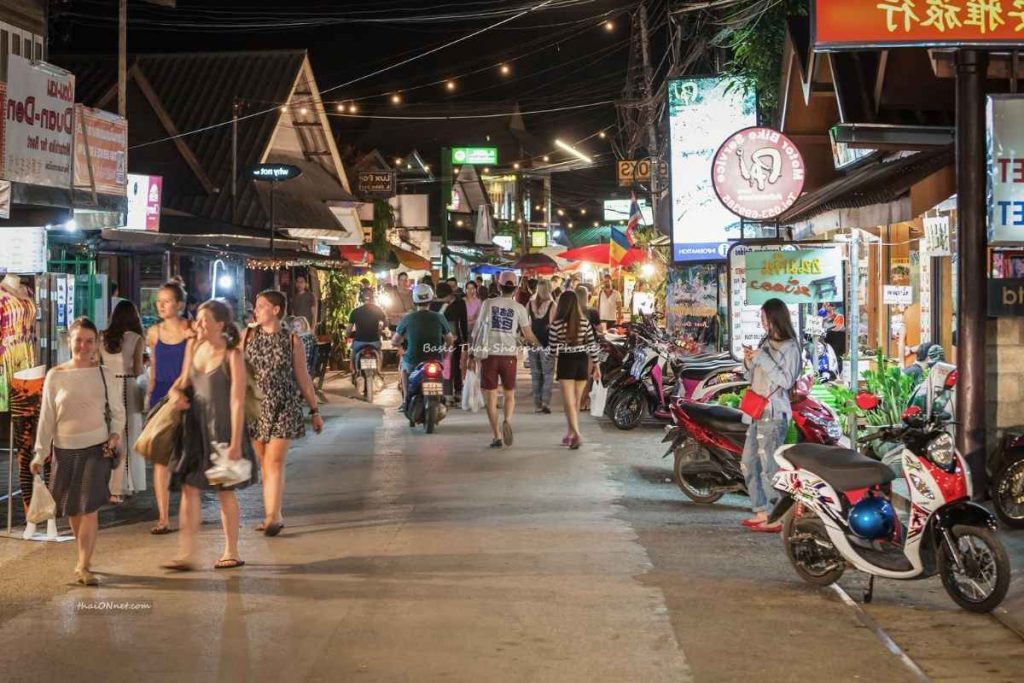
Shopping in Thailand can be fun, colourful, and practical. Visitors may shop at local markets, night markets, weekend markets, shopping malls, souvenir stalls, food markets, clothing shops, and small neighbourhood stores.
Some places have fixed prices. Other places allow polite bargaining. Some staff speak English, especially in tourist areas and malls, but basic Thai can still help you ask prices, choose items, pay, request a bag, or say thank you.
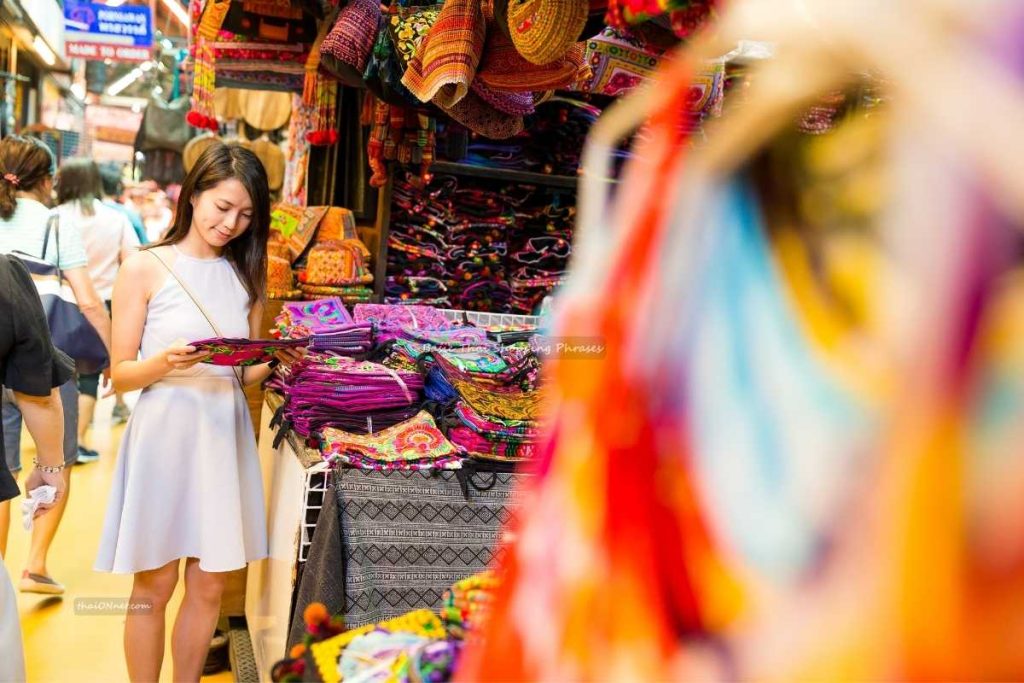
This guide shares Basic Thai Shopping Phrases for markets and malls. The phrases are simple, practical, and useful for first-time visitors, expats, families, and anyone who wants to shop with more confidence in Thailand.
You do not need perfect pronunciation. Speak slowly, smile, use polite endings, and point politely when needed.
👉 “Visitors who enjoy markets may also find this practical guide to Local Street Food In Asia helpful for exploring food areas with more confidence.”
Why Shopping Phrases Are Useful In Thailand
Basic Thai Shopping Phrases are useful because shopping often involves short and repeated questions. You may need to ask how much something costs, request a discount, choose a size, ask for another colour, pay with cash or card, or politely say no.
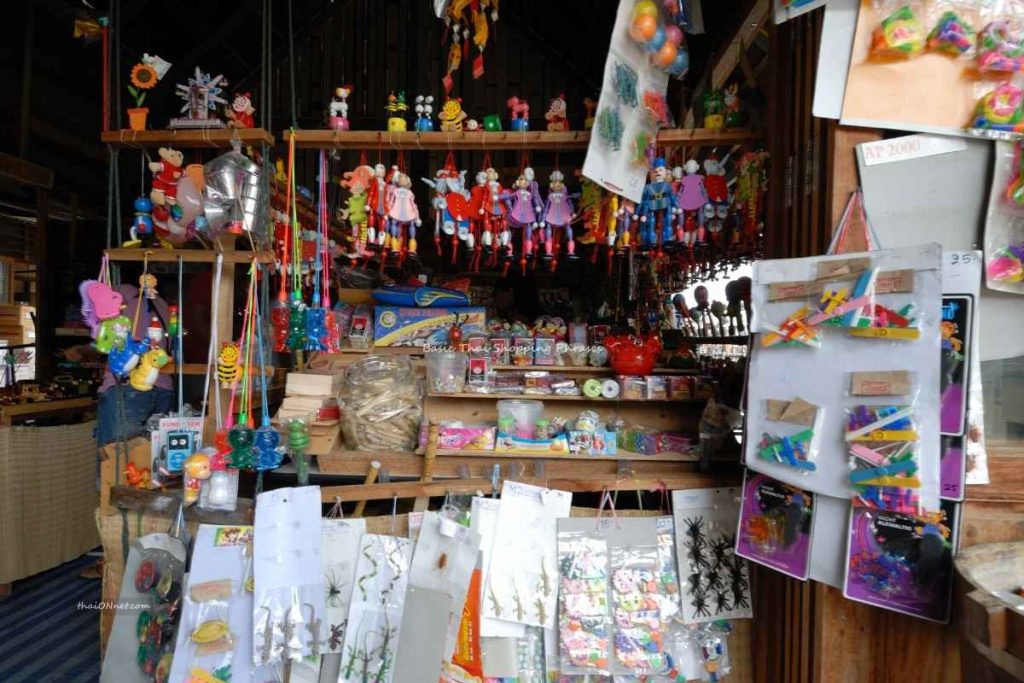
Shopping phrases can help when:
- Buying souvenirs
- Shopping at local markets
- Visiting night markets
- Buying clothes
- Buying fruit or snacks
- Asking for prices
- Bargaining politely
- Shopping in malls
- Asking for a receipt
- Requesting a bag
- Checking sizes or colours
- Paying with cash or card
Even when English is available, using a few Thai words can make the interaction friendlier.
Polite Endings For Shopping
Thai uses polite endings that make speech sound respectful.
Men usually say:
- kráp
Women usually say:
- kâ
For example:
- Tao rai kráp?
- Tao rai kâ?
Meaning:
- How much?
You can add “kráp” or “kâ” to many Basic Thai Shopping Phrases.
Politeness matters in Thailand. A gentle tone and smile often work better than speaking loudly or bargaining too hard.
Hello In A Shop
Thai phrase:
- Sawatdee kráp
- Sawatdee kâ
Meaning:
- Hello
Use this when entering a small shop, greeting a vendor, or starting a polite conversation.
In busy markets, you may not need to greet every vendor, but it is always friendly when you do.
Thank You
Thai phrase:
- Khop khun kráp
- Khop khun kâ
Meaning:
- Thank you
This is one of the most useful Basic Thai Shopping Phrases. Use it after asking a question, receiving help, paying, getting change, or leaving a shop.
Even if you do not buy anything, saying thank you politely is a good habit.
Excuse Me
Thai phrase:
- Khor thot kráp
- Khor thot kâ
Meaning:
- Excuse me
- Sorry
Use this when getting a vendor’s attention, passing through a crowded market, or apologising for bumping into someone.
This phrase is useful in markets, malls, food courts, and busy shopping streets.
How Much?
Thai phrase:
- Tao rai kráp?
- Tao rai kâ?
Meaning:
- How much?
This is the most important phrase for shopping in Thailand.
You can point at an item and ask:
- Tao rai kráp?
- Tao rai kâ?
The seller may answer in Thai, show the price on a calculator, or point to a price tag.
What Is The Price?
Thai phrase:
- Raa kha tao rai kráp?
- Raa kha tao rai kâ?
Meaning:
- What is the price?
This is a slightly fuller version of “how much?”
“Raa kha” means price.
For most visitors, “tao rai?” is enough, but this longer phrase is also useful.
I Want This
Thai phrase:
- Ao an nee kráp
- Ao an nee kâ
Meaning:
- I want this
Use this while pointing at a product, souvenir, shirt, bag, fruit, snack, or menu item.
This is one of the easiest Basic Thai Shopping Phrases because you do not need to know the item name.
I Do Not Want It
Thai phrase:
- Mai ao kráp
- Mai ao kâ
Meaning:
- I do not want it
Use this politely if a vendor offers something you do not want.
It is useful at markets, tourist stalls, shopping streets, and transport areas.
Keep your tone calm and friendly.
I Am Just Looking
Thai phrase:
- Doo doo kráp
- Doo doo kâ
Meaning:
- I am just looking
This is useful when a shopkeeper approaches you and you are not ready to buy.
You can smile and say:
- Doo doo kráp.
- Doo doo kâ.
It helps reduce pressure while staying polite.
Too Expensive
Thai phrase:
- Paeng pai kráp
- Paeng pai kâ
Meaning:
- Too expensive
Use this politely at markets or small stalls where bargaining is common.
Avoid using it aggressively. A smile helps.
This phrase is not usually useful in malls, supermarkets, official stores, or branded shops where prices are fixed.
Can You Reduce The Price?
Thai phrase:
- Lot dai mai kráp?
- Lot dai mai kâ?
Meaning:
- Can you reduce the price?
This is one of the most useful Basic Thai Shopping Phrases for markets.
Use it in places where bargaining is normal, such as souvenir markets or some street stalls.
Do not expect discounts everywhere. In malls and official stores, prices are usually fixed.
Can You Make It Cheaper?
Thai phrase:
- Thook kwaa nee dai mai kráp?
- Thook kwaa nee dai mai kâ?
Meaning:
- Can it be cheaper than this?
This phrase is useful when bargaining politely.
If the seller says no, accept it calmly or choose another item.
Bargaining should feel friendly, not like an argument.
I Will Take It
Thai phrase:
- Ao kráp
- Ao kâ
Meaning:
- I will take it
You can also say:
- Ao an nee kráp
- Ao an nee kâ
Meaning:
- I will take this
Use this when you are ready to buy.
I Will Not Take It
Thai phrase:
- Mai ao kráp
- Mai ao kâ
Meaning:
- I will not take it
- I do not want it
This is useful if the price is too high or the item is not right.
Say it politely and walk away calmly if needed.
Do You Have This?
Thai phrase:
- Mee an nee mai kráp?
- Mee an nee mai kâ?
Meaning:
- Do you have this?
Use this while showing a photo, product, colour, or similar item.
This is useful in malls, markets, pharmacies, clothing shops, and souvenir stalls.
Do You Have Another One?
Thai phrase:
- Mee eek mai kráp?
- Mee eek mai kâ?
Meaning:
- Do you have another one?
Use this if you want a different item, cleaner item, unopened item, or another piece.
It is useful when buying clothes, bags, shoes, gifts, electronics, or souvenirs.
Do You Have A New One?
Thai phrase:
- Mee an mai mai kráp?
- Mee an mai mai kâ?
Meaning:
- Do you have a new one?
This is useful if the display item looks handled, damaged, or dusty.
“Mai” can mean new, depending on tone and context. In this phrase, it means new.
Do You Have A Bag?
Thai phrase:
- Mee thung mai kráp?
- Mee thung mai kâ?
Meaning:
- Do you have a bag?
“Thung” means bag.
You can use this after buying something.
Some shops may charge for bags or encourage reusable bags, depending on the store.
Can I Have A Bag?
Thai phrase:
- Khor thung kráp
- Khor thung kâ
Meaning:
- Can I have a bag?
This is a short and useful phrase for markets, shops, food stalls, and small stores.
Can I Have A Receipt?
Thai phrase:
- Khor bai set kráp
- Khor bai set kâ
Meaning:
- Can I have a receipt?
This is useful in malls, pharmacies, electronics shops, supermarkets, and larger stores.
At market stalls, receipts may not always be available.
Can I Pay By Card?
Thai phrase:
- Chai bat dai mai kráp?
- Chai bat dai mai kâ?
Meaning:
- Can I use a card?
“Bat” means card.
This is useful in malls, cafés, supermarkets, and larger shops.
In local markets, small shops, and street stalls, cash may still be easier.
Cash Only?
Thai phrase:
- Rap tae ngoen sod mai kráp?
- Rap tae ngoen sod mai kâ?
Meaning:
- Cash only?
“Cash” is “ngoen sod.”
If the vendor says yes, use cash.
It is smart to carry small notes when shopping at markets.
Do You Accept QR Payment?
Thai phrase:
- Chai QR dai mai kráp?
- Chai QR dai mai kâ?
Meaning:
- Can I use QR payment?
QR payments are common in Thailand, but availability can depend on the shop, bank, app, and visitor payment options.
Foreign visitors may not always be able to use local QR systems, so cash and cards are still useful.
Do You Have My Size?
Thai phrase:
- Mee size khong phom mai kráp?
- Mee size khong chan mai kâ?
Meaning:
- Do you have my size?
Men can use “phom” for “I/me.” Women can use “chan.”
A simpler version is:
- Mee size nee mai kráp?
- Mee size nee mai kâ?
Meaning:
- Do you have this size?
Use it while pointing at a size label.
Bigger Size
Thai phrase:
- Yai kwaa nee kráp
- Yai kwaa nee kâ
Meaning:
- Bigger than this
Use this if clothes, shoes, hats, or bags are too small.
Smaller Size
Thai phrase:
- Lek kwaa nee kráp
- Lek kwaa nee kâ
Meaning:
- Smaller than this
Use this if the item is too large.
These size phrases are useful in clothing markets and malls.
Can I Try It On?
Thai phrase:
- Long dai mai kráp?
- Long dai mai kâ?
Meaning:
- Can I try it on?
Use this when buying clothes, shoes, hats, sunglasses, or accessories.
Some markets may not have fitting rooms, while malls usually do.
Where Is The Fitting Room?
Thai phrase:
- Hong long suea yoo tee nai kráp?
- Hong long suea yoo tee nai kâ?
Meaning:
- Where is the fitting room?
This is most useful in malls and clothing shops.
In small markets, the vendor may point to a small changing area or say it is not available.
Do You Have Another Colour?
Thai phrase:
- Mee see eun mai kráp?
- Mee see eun mai kâ?
Meaning:
- Do you have another colour?
“See” means colour.
Use this while pointing at the item.
Basic Colours In Thai
Useful colour words include:
- White: see khao
- Black: see dam
- Red: see daeng
- Blue: see nam ngoen
- Green: see khiao
- Yellow: see lueang
- Pink: see chompoo
- Purple: see muang
- Brown: see nam tan
- Grey: see thao
These words are useful when buying clothes, bags, shoes, toys, and souvenirs.
This Colour
Thai phrase:
- Ao see nee kráp
- Ao see nee kâ
Meaning:
- I want this colour
Use this while pointing at a colour.
It is simple and useful when pronunciation is difficult.
Do You Have A Different Design?
Thai phrase:
- Mee baep eun mai kráp?
- Mee baep eun mai kâ?
Meaning:
- Do you have another design?
“Baep” means style, design, or type.
Use this for clothes, souvenirs, bags, shoes, home items, and gifts.
Good Quality?
Thai phrase:
- Khun na phap dee mai kráp?
- Khun na phap dee mai kâ?
Meaning:
- Is the quality good?
This phrase may be useful, but in many shopping situations it is better to inspect the item yourself.
Check stitching, zippers, fabric, labels, packaging, and any damage before buying.
Is It Real?
Thai phrase:
- Khong thae mai kráp?
- Khong thae mai kâ?
Meaning:
- Is it genuine?
Use this carefully. In markets, many items may be inspired, copied, or not official.
For branded goods, official shops and authorised retailers are safer than market stalls.
Useful Thai Numbers For Shopping
Numbers help with prices and quantities.
- Zero: soon
- One: nueng
- Two: song
- Three: sam
- Four: see
- Five: haa
- Six: hok
- Seven: jet
- Eight: paet
- Nine: gao
- Ten: sip
- Twenty: yee sip
- One hundred: nueng roi
- One thousand: nueng pan
If the number is difficult, ask the seller to show the price on a calculator.
Shopping At Local Markets
Markets are good places to use Basic Thai Shopping Phrases. They are often lively, busy, and flexible.
At markets, you may buy:
- Clothes
- Fruit
- Snacks
- Souvenirs
- Bags
- Shoes
- Accessories
- Toys
- Handmade items
- Local products
- Street food
- Home items
Market shopping tips:
- Carry small cash
- Ask prices before buying
- Bargain politely where appropriate
- Check quality before paying
- Keep valuables secure
- Avoid blocking walkways
- Smile and stay patient
- Compare prices if unsure
Bargaining is normal in some markets, but not every vendor will reduce the price.
Shopping At Night Markets
Night markets are popular for food, souvenirs, clothes, gifts, and casual walking.
Useful phrases include:
- Tao rai kráp / kâ?: How much?
- Ao an nee kráp / kâ: I want this.
- Lot dai mai kráp / kâ?: Can you reduce the price?
- Khor thung kráp / kâ: Can I have a bag?
- Khop khun kráp / kâ: Thank you.
Night markets can be crowded, so keep your bag close and carry small notes.
Shopping In Malls
Shopping malls are usually easier for visitors because prices are more likely to be fixed and signs may include English.
In malls, useful phrases include:
- Mee size nee mai kráp / kâ?: Do you have this size?
- Long dai mai kráp / kâ?: Can I try it on?
- Chai bat dai mai kráp / kâ?: Can I use a card?
- Khor bai set kráp / kâ: Can I have a receipt?
- Hong long suea yoo tee nai kráp / kâ?: Where is the fitting room?
In malls, bargaining is usually not expected unless the shop is running a promotion or discount.
Shopping For Food
When buying food, useful phrases include:
- Tao rai kráp / kâ?: How much?
- Ao an nee kráp / kâ: I want this.
- Ao nueng kráp / kâ: I want one.
- Khor thung kráp / kâ: Can I have a bag?
- Mai phet kráp / kâ: Not spicy.
- Khop khun kráp / kâ: Thank you.
For fresh food, check appearance, smell, and whether the stall is busy with good turnover.
Shopping For Clothes
When buying clothes, useful phrases include:
- Mee size nee mai kráp / kâ?: Do you have this size?
- Long dai mai kráp / kâ?: Can I try it on?
- Yai kwaa nee kráp / kâ: Bigger than this.
- Lek kwaa nee kráp / kâ: Smaller than this.
- Mee see eun mai kráp / kâ?: Do you have another colour?
- Tao rai kráp / kâ?: How much?
At markets, fitting rooms may be limited. At malls, they are usually easier to find.
Shopping For Souvenirs
Souvenir shopping is common in Thailand. Visitors may buy magnets, clothes, bags, handmade goods, snacks, soaps, art, tea, herbs, or home decorations.
Useful phrases include:
- Tao rai kráp / kâ?: How much?
- Lot dai mai kráp / kâ?: Can you reduce the price?
- Mee baep eun mai kráp / kâ?: Do you have another design?
- Khor thung kráp / kâ: Can I have a bag?
- Ao an nee kráp / kâ: I want this.
- Khop khun kráp / kâ: Thank you.
Check quality and packaging if buying gifts to take home.
Polite Bargaining Tips
Bargaining can be part of market shopping, but it should be friendly.
Helpful tips:
- Smile
- Ask the price first
- Offer a fair lower price
- Do not insult the vendor
- Be willing to walk away
- Do not bargain if you are not interested
- Do not bargain in fixed-price shops
- Keep the tone light
- Say thank you even if you do not buy
A good bargain should feel fair to both sides.
When Not To Bargain
Do not usually bargain in:
- Supermarkets
- Convenience stores
- Department stores
- Branded shops
- Restaurants
- Official ticket counters
- Pharmacies
- Chain stores
- Malls with fixed prices
Bargaining is more common in markets, souvenir stalls, and some informal shops.
Understanding this difference makes shopping smoother.
Shopping Safety Tips
Thailand is generally easy to shop in, but busy markets require awareness.
Helpful tips:
- Keep your bag closed
- Carry small cash
- Check change before leaving
- Watch your phone
- Avoid leaving valuables on tables
- Inspect items before paying
- Check return rules
- Use trusted shops for expensive products
- Be careful with counterfeit goods
- Keep receipts for mall purchases
For expensive items, official stores are usually safer than market stalls.
Common Mistakes To Avoid
Using Incorrect Phrases
Some beginner phrase lists use unnatural words. Start with simple phrases like “tao rai,” “ao an nee,” and “khop khun.”
Bargaining Too Hard
Friendly bargaining is fine in markets, but aggressive bargaining can feel rude.
Bargaining In Malls
Mall prices are usually fixed.
Forgetting Cash
Small stalls may not accept cards.
Not Checking Quality
Inspect clothing, souvenirs, electronics, and gifts before paying.
Buying Too Quickly
Compare prices if you are unsure.
Forgetting To Say Thank You
“Khop khun” is useful even when you do not buy anything.
Simple Shopping Phrase List
Here is a quick list of Basic Thai Shopping Phrases:
- Hello: Sawatdee kráp / kâ
- Thank you: Khop khun kráp / kâ
- Excuse me: Khor thot kráp / kâ
- How much?: Tao rai kráp / kâ?
- What is the price?: Raa kha tao rai kráp / kâ?
- I want this: Ao an nee kráp / kâ
- I do not want it: Mai ao kráp / kâ
- I am just looking: Doo doo kráp / kâ
- Too expensive: Paeng pai kráp / kâ
- Can you reduce the price?: Lot dai mai kráp / kâ?
- Can I have a bag?: Khor thung kráp / kâ
- Can I have a receipt?: Khor bai set kráp / kâ
- Can I use a card?: Chai bat dai mai kráp / kâ?
- Can I try it on?: Long dai mai kráp / kâ?
- Do you have another colour?: Mee see eun mai kráp / kâ?
Save this list on your phone before visiting markets or malls.
👉 “Families who want more useful language for their trip may also learn these Thai Phrases For Families Visiting Thailand.”
Conclusion
Basic Thai Shopping Phrases can make shopping in Thailand easier, friendlier, and more enjoyable. Visitors do not need fluent Thai to ask prices, buy souvenirs, shop for clothes, pay at a mall, or bargain politely at a market.
The most useful phrases are “how much,” “I want this,” “too expensive,” “can you reduce the price,” “can I have a bag,” “can I use a card,” and “thank you.”
Use polite endings, speak slowly, smile, and remember that bargaining is normal in some markets but not in fixed-price malls or official stores.
With a small set of Basic Thai Shopping Phrases, visitors can shop more confidently in Thailand’s markets and malls.
FAQ
What Are The Most Useful Basic Thai Shopping Phrases?
The most useful Basic Thai Shopping Phrases include “tao rai” for how much, “ao an nee” for I want this, “paeng pai” for too expensive, and “lot dai mai” for can you reduce the price.
How Do I Ask How Much In Thai?
Say “Tao rai kráp?” if you are male and “Tao rai kâ?” if you are female.
How Do I Say I Want This In Thai?
Say “Ao an nee kráp” if you are male and “Ao an nee kâ” if you are female while pointing at the item.
How Do I Ask For A Discount In Thai?
Say “Lot dai mai kráp?” if you are male and “Lot dai mai kâ?” if you are female. It means “Can you reduce the price?”
Can I Bargain In Thai Markets?
Yes, bargaining is common in many local markets and souvenir stalls, but it should be polite and friendly.
Can I Bargain In Thai Malls?
Usually no. Malls, department stores, supermarkets, and branded shops normally have fixed prices.
How Do I Ask If I Can Pay By Card?
Say “Chai bat dai mai kráp?” if you are male and “Chai bat dai mai kâ?” if you are female.
How Do I Ask For A Bag In Thai?
Say “Khor thung kráp” if you are male and “Khor thung kâ” if you are female.
How Do I Ask For A Receipt In Thai?
Say “Khor bai set kráp” if you are male and “Khor bai set kâ” if you are female.
Do I Need Perfect Thai Pronunciation For Shopping?
No. Speak slowly, smile, use polite endings, point politely, and ask sellers to show prices on a calculator if needed.