


- Introduction
- Why Thai Restaurant Phrases Are Useful
- Polite Endings For Men And Women
- Hello At A Restaurant
- Thank You
- Asking For A Menu
- Asking If There Is An English Menu
- I Want This
- I Want One
- Useful Thai Numbers For Ordering
- Ordering Rice
- Ordering Water
- Asking For Ice
- Asking For No Sugar
- Not Spicy
- A Little Spicy
- Very Spicy
- Delicious
- Very Delicious
- Asking What A Dish Is
- Asking If A Dish Has Meat
- Asking For No Pork
- Asking For No Meat
- Asking About Allergies
- Asking For The Bill
- Asking If You Can Pay By Card
- Asking For Takeaway
- Asking To Eat Here
- Asking For A Spoon And Fork
- Asking For Chopsticks
- Asking For A Napkin
- Asking For A Plate
- Asking For A Bowl
- Asking For A Child-Friendly Dish
- Thai Food Words Visitors Should Know
- Common Thai Dishes Visitors May See
- Restaurant Etiquette In Thailand
- Street Food Tips
- Food Court Tips
- Common Mistakes To Avoid
- Simple Thai Restaurant Phrase List
- Conclusion
- FAQ
- What Are The Most Useful Thai Restaurant Phrases?
- How Do I Say Not Spicy In Thai?
- How Do I Ask For The Bill In Thai?
- How Do I Say I Want This In Thai?
- How Do I Ask For Water In Thai?
- How Do I Say Delicious In Thai?
- Can I Use English In Thai Restaurants?
- What Should I Say If I Have A Food Allergy?
- Do Thai Restaurants Use Chopsticks?
- What Is The Best Thai Phrase For Ordering At A Street Food Stall?
Introduction
Eating in Thailand is one of the best parts of visiting the country. From street food stalls and local cafés to food courts, beach restaurants, night markets, and family restaurants, Thai food is full of flavour, variety, and everyday culture.
For first-time visitors, ordering food can feel confusing at first. Menus may have English, photos, or translations, but small local places may use mostly Thai. Staff may speak some English in tourist areas, but not everywhere.
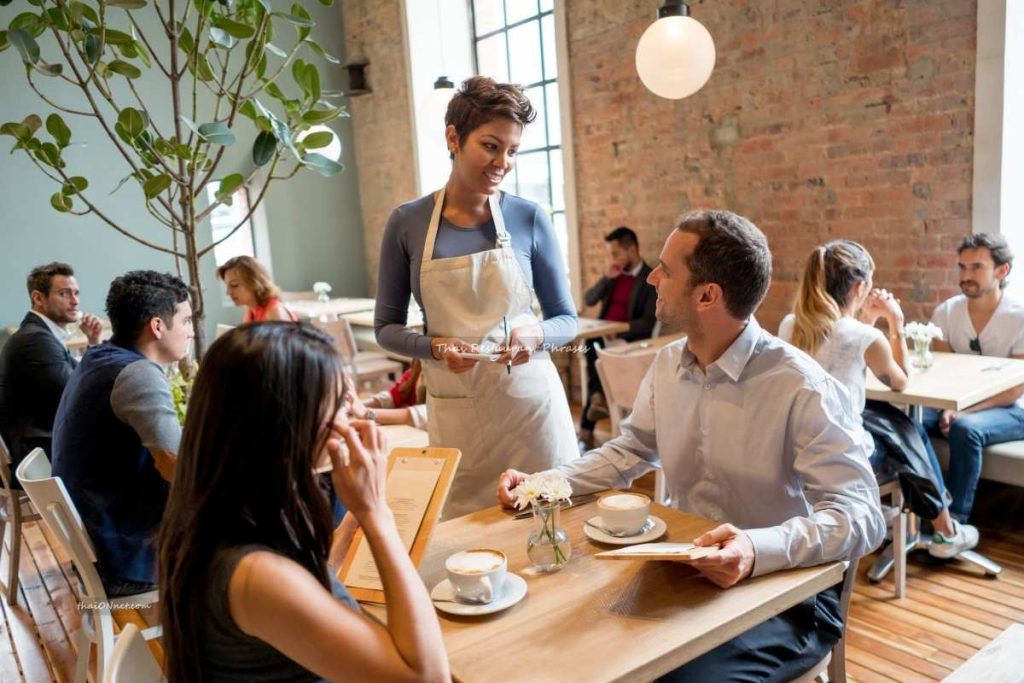
Learning a few Thai Restaurant Phrases can make dining easier, friendlier, and more respectful. You do not need perfect pronunciation. A smile, simple words, pointing at the menu, and polite endings can help a lot.
This guide gives practical Thai Restaurant Phrases for ordering food, asking about spice, requesting water, checking ingredients, asking for the bill, and saying thank you.
👉 “Visitors learning restaurant phrases may also enjoy this guide to Asian Drinks And Food Culture.”
Why Thai Restaurant Phrases Are Useful
Thai Restaurant Phrases are useful because restaurant situations often involve short and repeated communication. You may need to ask for a menu, order a dish, say not spicy, ask for water, explain an allergy, request the bill, or thank the staff.
Useful restaurant phrases can help when:
- Reading a Thai menu
- Ordering street food
- Eating at a local restaurant
- Visiting a food court
- Asking about spice level
- Asking for no sugar or no ice
- Ordering for children
- Asking for the bill
- Explaining simple dietary needs
- Showing respect to restaurant staff
Even if staff understand English, using a few Thai Restaurant Phrases can make the experience warmer.
Polite Endings For Men And Women
Thai uses polite endings that make sentences sound respectful.
Men usually add:
- kráp
Women usually add:
- kâ
For example:
- Thank you, kráp.
- Thank you, kâ.
These endings can be added to many Thai Restaurant Phrases.
If you are not sure what to say, using a smile, gentle tone, and “khop khun” for thank you is a good start.
Hello At A Restaurant
Thai phrase:
- Sawatdee kráp
- Sawatdee kâ
Meaning:
- Hello
Use this when entering a small restaurant, greeting staff, or speaking politely to a vendor.
In many casual places, you may not need a formal greeting, but it is always polite.
Thank You
Thai phrase:
- Khop khun kráp
- Khop khun kâ
Meaning:
- Thank you
This is one of the most useful Thai Restaurant Phrases. Use it when staff bring food, refill water, answer a question, take payment, or help with the menu.
A simple thank you can make dining feel more friendly and respectful.
Asking For A Menu
Thai phrase:
- Khor menu kráp
- Khor menu kâ
Meaning:
- Can I have the menu?
In many restaurants, menus may already be on the table. At small local places, you may need to point at a wall menu, food display, or picture.
If you cannot read the menu, you can ask staff for help or point to what another table is eating, if appropriate.
Asking If There Is An English Menu
Thai phrase:
- Mee menu phasa ang-grit mai kráp?
- Mee menu phasa ang-grit mai kâ?
Meaning:
- Do you have an English menu?
This phrase is useful in local restaurants outside tourist areas.
If there is no English menu, use pictures, translation apps, or simple Thai Restaurant Phrases such as “I want this” while pointing.
I Want This
Thai phrase:
- Ao an nee kráp
- Ao an nee kâ
Meaning:
- I want this
This is one of the easiest phrases for visitors because you can use it while pointing at a menu item, food photo, dish, drink, or dessert.
It works well at:
- Street food stalls
- Food courts
- Local restaurants
- Markets
- Cafés
- Bakeries
You do not need to know the full Thai name of the dish.
I Want One
Thai phrase:
- Ao nueng an kráp
- Ao nueng an kâ
Meaning:
- I want one
For food, you can also say:
- Ao nueng kráp
- Ao nueng kâ
Meaning:
- I want one
Use this when ordering one plate, one drink, one dessert, or one portion.
If ordering more, use Thai numbers or show fingers politely.
Useful Thai Numbers For Ordering
Numbers are useful when ordering food.
- One: nueng
- Two: song
- Three: sam
- Four: see
- Five: haa
- Six: hok
- Seven: jet
- Eight: paet
- Nine: gao
- Ten: sip
Examples:
- Ao song kráp: I want two.
- Ao sam kâ: I want three.
Numbers are helpful at food courts, markets, and street food stalls.
Ordering Rice
Thai word:
- Khao
Meaning:
- Rice
Useful phrases:
- Khor khao kráp
- Khor khao kâ
Meaning:
- Can I have rice?
Other useful rice words:
- Khao suay: steamed rice
- Khao niao: sticky rice
- Khao pad: fried rice
Rice is central to Thai meals, so this is a useful word to remember.
Ordering Water
Thai word:
- Nam
Meaning:
- Water
Thai phrase:
- Khor nam kráp
- Khor nam kâ
Meaning:
- Can I have water?
If you want bottled water, you can say:
- Khor nam khuat kráp
- Khor nam khuat kâ
Meaning:
- Can I have bottled water?
Water is one of the most practical Thai Restaurant Phrases for visitors.
Asking For Ice
Thai word:
- Nam khaeng
Meaning:
- Ice
Thai phrase:
- Khor nam khaeng kráp
- Khor nam khaeng kâ
Meaning:
- Can I have ice?
If you do not want ice, say:
- Mai sai nam khaeng kráp
- Mai sai nam khaeng kâ
Meaning:
- No ice
This is useful when ordering water, soft drinks, coffee, tea, smoothies, or fruit drinks.
Asking For No Sugar
Thai phrase:
- Mai sai nam tan kráp
- Mai sai nam tan kâ
Meaning:
- Do not add sugar
Thai drinks can sometimes be sweet, especially iced tea, coffee, fruit drinks, and smoothies.
If you want less sugar, you can say:
- Waan noi kráp
- Waan noi kâ
Meaning:
- Less sweet
This phrase is very useful in cafés and drink stalls.
Not Spicy
Thai phrase:
- Mai phet kráp
- Mai phet kâ
Meaning:
- Not spicy
This is one of the most important Thai Restaurant Phrases for visitors who cannot eat spicy food.
Thai food can be much spicier than visitors expect. Say “mai phet” before ordering if you want the dish mild.
A Little Spicy
Thai phrase:
- Phet nit noi kráp
- Phet nit noi kâ
Meaning:
- A little spicy
Use this if you want some spice but not too much.
Remember that “a little spicy” can still be hotter than expected in some places.
Very Spicy
Thai phrase:
- Phet mak kráp
- Phet mak kâ
Meaning:
- Very spicy
You may hear this when staff warn you about a dish.
If someone says a dish is “phet mak,” it may be too spicy for many first-time visitors.
Delicious
Thai phrase:
- Aroi kráp
- Aroi kâ
Meaning:
- Delicious
This is a friendly phrase to use when you enjoy the food.
You can say it to restaurant staff, cooks, vendors, or local friends.
A simple “aroi” can make people smile.
Very Delicious
Thai phrase:
- Aroi mak kráp
- Aroi mak kâ
Meaning:
- Very delicious
Use this when you really enjoyed a meal.
It is a nice way to show appreciation after eating Thai food.
Asking What A Dish Is
Thai phrase:
- Nee arai kráp?
- Nee arai kâ?
Meaning:
- What is this?
Use this while pointing at a dish, menu photo, buffet item, or food stall display.
This is useful when you see something interesting but do not know the name.
Asking If A Dish Has Meat
Thai phrase:
- Mee nuea sat mai kráp?
- Mee nuea sat mai kâ?
Meaning:
- Does it have meat?
Useful meat words include:
- Chicken: gai
- Pork: moo
- Beef: nuea
- Fish: pla
- Shrimp: goong
- Egg: khai
This can help visitors with food preferences or dietary needs.
Asking For No Pork
Thai phrase:
- Mai sai moo kráp
- Mai sai moo kâ
Meaning:
- Do not add pork
This is useful because pork is common in many Thai dishes.
If you cannot eat pork, say it clearly before ordering.
Asking For No Meat
Thai phrase:
- Mai sai nuea sat kráp
- Mai sai nuea sat kâ
Meaning:
- Do not add meat
This may help, but vegetarian visitors should still ask carefully because some dishes may include fish sauce, shrimp paste, or meat broth.
A simple way to ask for vegetarian food is:
- Gin jay mai kráp?
- Gin jay mai kâ?
Meaning:
- Is it vegetarian?
However, “jay” can imply a stricter vegetarian style in Thailand, so it may not always match every visitor’s meaning.
Asking About Allergies
If you have a serious food allergy, prepare a written Thai allergy card before travelling. Do not rely only on spoken phrases.
Useful phrase:
- Phom phae [food] kráp
- Chan phae [food] kâ
Meaning:
- I am allergic to [food]
Examples:
- Phom phae tua kráp: I am allergic to peanuts.
- Chan phae goong kâ: I am allergic to shrimp.
For serious allergies, show the written phrase in Thai and confirm carefully.
Asking For The Bill
Thai phrase:
- Khor bill kráp
- Khor bill kâ
Meaning:
- Can I have the bill?
This is one of the most useful Thai Restaurant Phrases at restaurants and cafés.
At casual local places, you may pay at the counter. At street stalls, you may pay immediately after ordering or after eating.
Asking If You Can Pay By Card
Thai phrase:
- Chai bat dai mai kráp?
- Chai bat dai mai kâ?
Meaning:
- Can I use a card?
“Bat” means card.
Many small local restaurants and street food stalls may prefer cash. Malls, cafés, and larger restaurants may accept cards or QR payment, depending on the place.
Visitors should keep some cash for smaller restaurants.
Asking For Takeaway
Thai phrase:
- Sai thung kráp
- Sai thung kâ
Meaning:
- Put it in a bag
- Takeaway, please
You can also say:
- Ao glap baan kráp
- Ao glap baan kâ
Meaning:
- Take home, please
This is useful if you cannot finish the food or want to order takeaway.
Asking To Eat Here
Thai phrase:
- Gin thee nee kráp
- Gin thee nee kâ
Meaning:
- Eat here
Use this if staff ask whether you want takeaway or to eat at the restaurant.
At food stalls, they may ask whether you want to eat there or take away.
Asking For A Spoon And Fork
Thai phrase:
- Khor chon gap som kráp
- Khor chon gap som kâ
Meaning:
- Can I have a spoon and fork?
In Thailand, many dishes are eaten with a spoon and fork. Chopsticks are usually used for some noodle dishes, not all meals.
A spoon and fork are normal in Thai restaurants.
Asking For Chopsticks
Thai phrase:
- Khor dtakiap kráp
- Khor dtakiap kâ
Meaning:
- Can I have chopsticks?
This is useful for noodle dishes.
Do not worry if you prefer a spoon and fork. Many Thai meals are eaten that way.
Asking For A Napkin
Thai phrase:
- Khor tissue kráp
- Khor tissue kâ
Meaning:
- Can I have a tissue?
Many casual restaurants use tissues instead of Western-style napkins.
This phrase is useful in small restaurants, cafés, and food stalls.
Asking For A Plate
Thai phrase:
- Khor jaan kráp
- Khor jaan kâ
Meaning:
- Can I have a plate?
Useful if you are sharing food with family or friends.
Thai meals are often shared, especially when eating with a group.
Asking For A Bowl
Thai phrase:
- Khor thuay kráp
- Khor thuay kâ
Meaning:
- Can I have a bowl?
Useful for soup, noodles, shared dishes, or children.
Asking For A Child-Friendly Dish
There is no single perfect phrase for “child-friendly,” but you can ask for not spicy.
Thai phrase:
- Mai phet kráp
- Mai phet kâ
Meaning:
- Not spicy
You can also order simple dishes such as fried rice, omelette, grilled chicken, rice, soup, or noodles.
Families should ask about spice, bones, shells, and small ingredients if needed.
Thai Food Words Visitors Should Know
Useful food words include:
- Rice: khao
- Chicken: gai
- Pork: moo
- Beef: nuea
- Fish: pla
- Shrimp: goong
- Egg: khai
- Vegetables: pak
- Noodles: guay tiew
- Soup: tom
- Fried: pad
- Grilled: yang
- Curry: gaeng
- Spicy: phet
- Sweet: waan
- Sour: priao
- Salty: khem
These words help you understand common menu items and ask simple questions.
Common Thai Dishes Visitors May See
Visitors may see dishes such as:
- Pad Thai: Thai-style fried noodles
- Khao pad: fried rice
- Tom yum: spicy sour soup
- Tom kha gai: coconut chicken soup
- Som tam: papaya salad
- Pad krapao: stir-fry with holy basil
- Gaeng keow wan: green curry
- Moo ping: grilled pork skewers
- Khao man gai: chicken rice
- Guay tiew: noodle soup
Dish names can be written differently in English, so do not worry if spelling changes between menus.
Restaurant Etiquette In Thailand
Dining in Thailand is usually relaxed, but polite behaviour matters.
Helpful etiquette tips include:
- Greet staff politely
- Speak calmly
- Do not snap fingers at staff
- Say thank you
- Do not waste food if possible
- Ask before taking close photos of staff or kitchens
- Keep children seated in busy places
- Be patient during busy times
- Respect local dining habits
- Use a spoon and fork when provided
Small polite actions can make restaurant experiences smoother.
Street Food Tips
Street food is a big part of eating in Thailand. Visitors can enjoy many dishes from markets, food carts, and local stalls.
Helpful tips include:
- Choose busy stalls with steady turnover
- Look for freshly cooked food
- Ask for “mai phet” if you do not want spicy
- Carry small cash
- Point at what you want
- Watch how locals order
- Keep hand sanitiser nearby
- Check ingredients if you have allergies
- Be careful with hot soup or oil
- Use a translation app if needed
Street food can be simple and delicious when you order carefully.
Food Court Tips
Food courts are useful for visitors because they often have pictures, prices, and many choices in one place.
In some food courts, you may need to get a payment card or coupon before ordering. In others, you can pay directly.
Helpful food court phrases include:
- Tao rai kráp / kâ?: How much?
- Ao an nee kráp / kâ: I want this.
- Mai phet kráp / kâ: Not spicy.
- Khor nam kráp / kâ: Can I have water?
- Khop khun kráp / kâ: Thank you.
Food courts are good places to practise Thai Restaurant Phrases because ordering is usually quick and visual.
Common Mistakes To Avoid
Saying The Wrong Phrase For I Do Not Understand
Use “mai khao jai” for “I do not understand.” Some beginner lists use unnatural phrases.
Forgetting To Ask For Not Spicy
If you are sensitive to spice, say “mai phet” before ordering.
Assuming Every Dish Is Vegetarian
Some dishes may contain fish sauce, shrimp paste, broth, or small dried shrimp.
Asking For Complicated Changes
Simple requests are easier. For example, “not spicy” or “no pork” is clearer than a long explanation.
Forgetting Cash
Small restaurants and street food stalls may prefer cash.
Not Checking Allergens
If you have allergies, show a written Thai allergy card.
Being Embarrassed To Point
Pointing at menu pictures is normal and useful for visitors.
Simple Thai Restaurant Phrase List
Here is a quick list of Thai Restaurant Phrases for visitors.
- Hello: Sawatdee kráp / kâ
- Thank you: Khop khun kráp / kâ
- Can I have the menu?: Khor menu kráp / kâ
- I want this: Ao an nee kráp / kâ
- How much?: Tao rai kráp / kâ?
- Can I have water?: Khor nam kráp / kâ
- Not spicy: Mai phet kráp / kâ
- A little spicy: Phet nit noi kráp / kâ
- Very delicious: Aroi mak kráp / kâ
- Can I have the bill?: Khor bill kráp / kâ
- Takeaway, please: Sai thung kráp / kâ
- Eat here: Gin thee nee kráp / kâ
- No ice: Mai sai nam khaeng kráp / kâ
- No sugar: Mai sai nam tan kráp / kâ
- I do not understand: Mai khao jai kráp / kâ
Save this list on your phone before eating out.
👉 “Visitors who want more useful language beyond restaurants may also learn these Thai Phrases For Everyday Travel.”
Conclusion
Thai Restaurant Phrases can make dining in Thailand easier, friendlier, and more enjoyable. Visitors do not need to speak perfect Thai. A few simple phrases can help with menus, ordering, spice levels, drinks, allergies, payment, and polite communication.
The most useful phrases include “hello,” “thank you,” “I want this,” “not spicy,” “can I have water,” “can I have the bill,” and “how much.”
Use polite endings, point at the menu when needed, ask simple questions, and show a written allergy card if you have serious food allergies.
With a small set of Thai Restaurant Phrases, visitors can enjoy Thai food with more confidence and respect.
FAQ
What Are The Most Useful Thai Restaurant Phrases?
The most useful Thai Restaurant Phrases include “ao an nee” for “I want this,” “mai phet” for “not spicy,” “khor nam” for “can I have water,” and “khor bill” for “can I have the bill.”
How Do I Say Not Spicy In Thai?
Say “Mai phet kráp” if you are male and “Mai phet kâ” if you are female.
How Do I Ask For The Bill In Thai?
Say “Khor bill kráp” if you are male and “Khor bill kâ” if you are female.
How Do I Say I Want This In Thai?
Say “Ao an nee kráp” if you are male and “Ao an nee kâ” if you are female while pointing at the item.
How Do I Ask For Water In Thai?
Say “Khor nam kráp” if you are male and “Khor nam kâ” if you are female.
How Do I Say Delicious In Thai?
Say “Aroi kráp” if you are male and “Aroi kâ” if you are female. For “very delicious,” say “Aroi mak kráp” or “Aroi mak kâ.”
Can I Use English In Thai Restaurants?
Yes, many restaurants in tourist areas have English menus or staff who speak some English. Thai Restaurant Phrases are still useful in local restaurants, markets, and street food stalls.
What Should I Say If I Have A Food Allergy?
Prepare a written Thai allergy card before travelling. You can also say “Phom phae [food] kráp” if you are male or “Chan phae [food] kâ” if you are female.
Do Thai Restaurants Use Chopsticks?
Some noodle dishes are eaten with chopsticks, but many Thai meals are eaten with a spoon and fork.
What Is The Best Thai Phrase For Ordering At A Street Food Stall?
“Ao an nee kráp” or “Ao an nee kâ” means “I want this.” It is very useful when pointing at food or menu pictures.