


- Introduction
- How Thai Adjectives Work
- Describing Size
- Describing Appearance
- Describing Personality
- Describing Age And Condition
- Describing Quality
- Describing Food And Drinks
- Asking Whether Food Is Spicy
- Describing Price
- Describing Difficulty
- Describing Speed
- Describing Temperature And Weather
- Describing Feelings
- Describing Places
- Describing Colours
- Using Mak For “Very”
- Using Nit Noi For “A Little”
- Using Koen Pai For “Too”
- Making Adjectives Negative
- Asking Questions With Adjectives
- Comparing Two Things With Kwa
- Asking Which One Is Better
- Expressing The Most With Thi Sut
- Using Adjectives With Classifiers
- Describing A Specific Person
- Polite Particles With Descriptions
- Useful Opposite Pairs
- Useful Everyday Descriptions
- Common Beginner Mistakes
- A Simple Practice Method
- Conclusion
- FAQ
- Where Do Thai Adjectives Go In A Sentence?
- Does Thai Need A Word For “Is” Before An Adjective?
- How Do You Say “Very” With A Thai Adjective?
- How Do You Make A Thai Adjective Negative?
- How Do You Ask Whether Something Has A Quality?
- How Do You Compare Two Things In Thai?
- How Do You Say “The Most” In Thai?
- What Are Useful Thai Adjectives For Food?
- What Are Useful Thai Adjectives For People?
- Can Thai Adjectives Describe Actions?
Introduction
Learning words for describing people, food, places, weather, feelings, and everyday objects can quickly make your spoken Thai more useful. With a small collection of common Thai adjectives, beginners can say that something is large, small, beautiful, expensive, hot, cold, easy, difficult, or delicious.
The basic grammar is often simple. In Thai, describing words normally follow the noun:
บ้านใหญ่
Ban yai.
A large house
รถใหม่
Rot mai.
A new car
อาหารอร่อย
Ahaan aroi.
Delicious food
Thai also allows an adjective to work as the main description in a sentence without adding a separate word for “is.”
บ้านใหญ่ can therefore mean both “a large house” and “the house is large,” depending on context.
This guide introduces useful Thai adjectives, explains where they appear in sentences, and shows how to make descriptions stronger, negative, comparative, and polite.
👉 “Readers practicing Thai adjectives may also explore these simple homemade Thai herbal drink ideas for more everyday vocabulary and cultural context.”
How Thai Adjectives Work
English usually places adjectives before nouns:
- Large house
- Beautiful beach
- Expensive restaurant
Thai normally places the noun first:

บ้านใหญ่
Ban yai.
Large house
ชายหาดสวย
Chai hat suai.
Beautiful beach
ร้านอาหารแพง
Ran ahaan phaeng.
Expensive restaurant
The basic pattern is:
Noun + adjective
This word order is one of the most important rules for beginner Thai adjectives.
You do not normally need a word equivalent to “is” between the noun and adjective.
น้ำเย็น
Nam yen.
The water is cold.
ห้องสะอาด
Hong sa-at.
The room is clean.
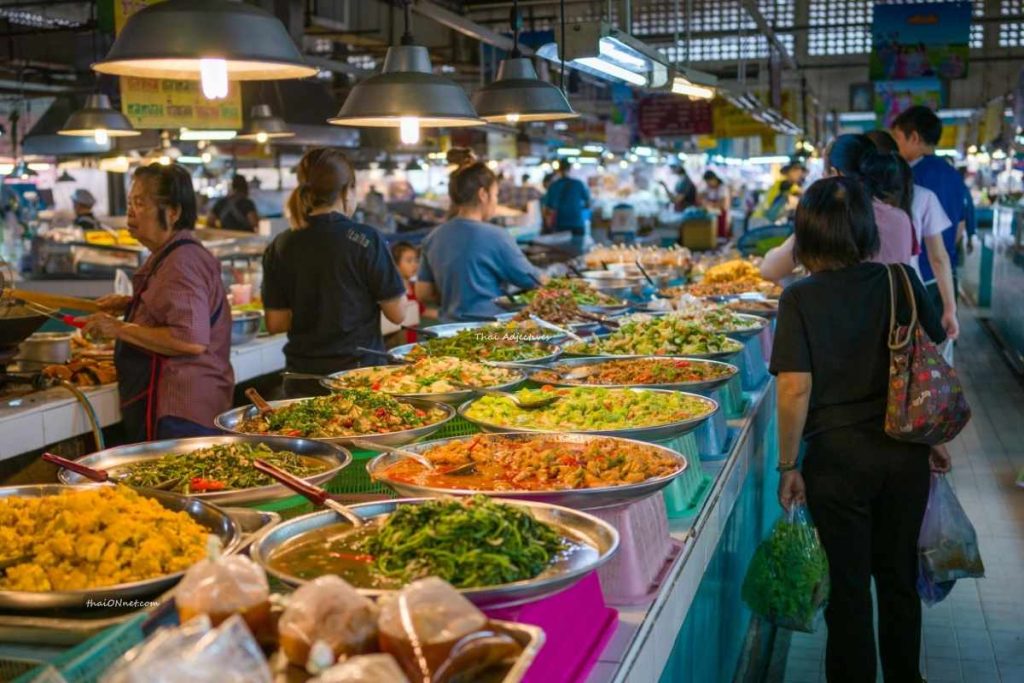
ตลาดใหญ่
Talat yai.
The market is large.
Describing Size
Useful words for size include:
ใหญ่ — yai — big or large
เล็ก — lek — small
สูง — sung — tall or high
เตี้ย — tia — short in height
ยาว — yao — long
สั้น — san — short in length
กว้าง — kwang — wide
แคบ — khaep — narrow
Examples:
บ้านใหญ่
Ban yai.
The house is large.
ห้องเล็ก
Hong lek.
The room is small.
เขาสูง
Khao sung.
He or she is tall.
ถนนแคบ
Thanon khaep.
The road is narrow.
These Thai adjectives are useful when talking about homes, clothes, roads, people, vehicles, and places.
Describing Appearance
Common words for general appearance include:
สวย — suai — beautiful
หล่อ — lo — handsome
น่ารัก — na rak — cute or lovely
ดูดี — du di — looks good
สะอาด — sa-at — clean
สกปรก — sokkaprok — dirty
ใหม่ — mai — new
เก่า — kao — old
Examples:
เธอสวยมาก
Thoe suai mak.
She is very beautiful.
เขาหล่อครับ
Khao lo khrap.
He is handsome.
เด็กน่ารัก
Dek na rak.
The child is cute.
โรงแรมดูดี
Rongraem du di.
The hotel looks good.
ห้องสะอาดมาก
Hong sa-at mak.
The room is very clean.
When describing people, use Thai adjectives respectfully and consider whether the comment is appropriate for the relationship.
Describing Personality
Useful personality words include:
ใจดี — jai di — kind
เป็นมิตร — pen mit — friendly
สุภาพ — suphap — polite
ตลก — talok — funny
ขยัน — khayan — hardworking
ขี้เกียจ — khi kiat — lazy
ฉลาด — chalat — clever
ใจเย็น — jai yen — calm
ใจร้อน — jai ron — impatient or hot-tempered
เงียบ — ngiap — quiet
Examples:
ครูใจดี
Khru jai di.
The teacher is kind.
พนักงานเป็นมิตร
Phanakngan pen mit.
The employee is friendly.
เขาขยันมาก
Khao khayan mak.
He or she is very hardworking.
เด็กคนนี้ฉลาด
Dek khon ni chalat.
This child is clever.
These Thai adjectives help beginners talk about behaviour and personality rather than only physical appearance.
Describing Age And Condition
Common words include:
ใหม่ — mai — new
เก่า — kao — old
หนุ่ม — num — young man or youthful
สาว — sao — young woman
แก่ — kae — old or elderly
ดี — di — good
ไม่ดี — mai di — not good
เสีย — sia — broken, spoiled, or damaged
พร้อม — phrom — ready
Examples:
รถใหม่
Rot mai.
The car is new.
โทรศัพท์เก่า
Thorasap kao.
The phone is old.
เครื่องนี้เสีย
Khrueang ni sia.
This machine is broken.
ผมพร้อมครับ
Phom phrom khrap.
I am ready.
Be careful when using kae directly for a person. Although it means old, it can sound impolite. A more respectful phrase for an older person is often:
ผู้สูงอายุ — phu sung ayu — elderly person
Describing Quality
Useful quality words include:
ดี — di — good
ไม่ดี — mai di — not good
เยี่ยม — yiam — excellent
แย่ — yae — bad or terrible
แข็งแรง — khaeng raeng — strong
อ่อนแอ — on ae — weak
ทน — thon — durable
ปลอดภัย — plotphai — safe
อันตราย — antarai — dangerous
Examples:
ร้านนี้ดี
Ran ni di.
This shop is good.
บริการเยี่ยมมาก
Borikan yiam mak.
The service is excellent.
เก้าอี้แข็งแรง
Kao-i khaeng raeng.
The chair is strong.
ถนนนี้อันตราย
Thanon ni antarai.
This road is dangerous.
These practical Thai adjectives can be used when reviewing services, products, transport, accommodation, and everyday situations.
Describing Food And Drinks
Food-related descriptions are especially useful in Thailand.
Common words include:
อร่อย — aroi — delicious
หวาน — wan — sweet
เค็ม — khem — salty
เปรี้ยว — priao — sour
ขม — khom — bitter
เผ็ด — phet — spicy
จืด — chuet — bland
มัน — man — oily, fatty, or rich
สด — sot — fresh
ร้อน — ron — hot
เย็น — yen — cold
Examples:
อาหารอร่อยมาก
Ahaan aroi mak.
The food is very delicious.
แกงเผ็ด
Kaeng phet.
Spicy curry
กาแฟหวานเกินไป
Kafae wan koen pai.
The coffee is too sweet.
ปลาสด
Pla sot.
The fish is fresh.
น้ำเย็น
Nam yen.
Cold water
Food-related Thai adjectives can help you order meals, explain preferences, and understand restaurant conversations.
Asking Whether Food Is Spicy
A useful question is:
เผ็ดไหมครับ/คะ
Phet mai khrap/kha?
Is it spicy?
Possible answers include:
เผ็ดครับ/ค่ะ
Phet khrap/kha.
Yes, it is spicy.
ไม่เผ็ดครับ/ค่ะ
Mai phet khrap/kha.
No, it is not spicy.
เผ็ดนิดหน่อย
Phet nit noi.
A little spicy.
เผ็ดมาก
Phet mak.
Very spicy.
You can request:
ไม่เผ็ดครับ/ค่ะ
Mai phet khrap/kha.
Not spicy, please.
เผ็ดน้อยครับ/ค่ะ
Phet noi khrap/kha.
A little spicy, please.
Describing Price
Useful price words include:
แพง — phaeng — expensive
ถูก — thuk — inexpensive or cheap
คุ้ม — khum — good value
ฟรี — fri — free
Examples:
อันนี้แพง
An ni phaeng.
This is expensive.
ร้านนี้ไม่แพง
Ran ni mai phaeng.
This shop is not expensive.
อาหารที่นี่ถูก
Ahaan thi ni thuk.
The food here is inexpensive.
คุ้มมาก
Khum mak.
It is very good value.
These Thai adjectives are useful when comparing shops, restaurants, hotels, services, and transport.
Describing Difficulty
Common words include:
ง่าย — ngai — easy
ยาก — yak — difficult
ซับซ้อน — sap son — complicated
สะดวก — saduak — convenient
ไม่สะดวก — mai saduak — inconvenient or not convenient
Examples:
ภาษาไทยไม่ง่าย
Phasa Thai mai ngai.
Thai is not easy.
คำนี้ยาก
Kham ni yak.
This word is difficult.
วิธีนี้สะดวก
Withi ni saduak.
This method is convenient.
วันนี้ไม่สะดวกครับ
Wan ni mai saduak khrap.
Today is not convenient for me.
The phrase mai saduak is also a polite way to say that you are unavailable or unable to do something.
Describing Speed
Useful words include:
เร็ว — reo — fast
ช้า — cha — slow
Examples:
รถคันนี้เร็ว
Rot khan ni reo.
This vehicle is fast.
อินเทอร์เน็ตช้า
Internet cha.
The internet is slow.
พูดช้าๆ ได้ไหมครับ
Phut cha cha dai mai khrap?
Can you speak slowly?
When used after a verb, these words may function like English adverbs:
เดินเร็ว
Doen reo.
Walk quickly.
พูดช้า
Phut cha.
Speak slowly.
Many Thai adjectives can therefore describe either nouns or actions depending on their position.
Describing Temperature And Weather
Common words include:
ร้อน — ron — hot
เย็น — yen — cool or cold
หนาว — nao — cold weather or feeling cold
อบอุ่น — op un — warm
ชื้น — chuen — humid or damp
แห้ง — haeng — dry
Examples:
วันนี้ร้อนมาก
Wan ni ron mak.
Today is very hot.
อากาศเย็น
Akat yen.
The weather is cool.
ผมหนาวครับ
Phom nao khrap.
I feel cold.
ห้องชื้น
Hong chuen.
The room is damp.
The distinction between yen and nao is useful. Yen often describes something cool or cold, while nao commonly describes cold weather or a person feeling cold.
Describing Feelings
Useful words include:
ดีใจ — di jai — happy or pleased
เสียใจ — sia jai — sad or sorry
มีความสุข — mi khwam suk — happy
เหนื่อย — nueai — tired
ง่วง — nguang — sleepy
หิว — hiu — hungry
อิ่ม — im — full after eating
กลัว — klua — afraid
กังวล — kangwon — worried
ตื่นเต้น — tuen ten — excited
Examples:
ฉันดีใจค่ะ
Chan di jai kha.
I am happy.
ผมเหนื่อยครับ
Phom nueai khrap.
I am tired.
เด็กง่วงแล้ว
Dek nguang laeo.
The child is sleepy now.
ไม่ต้องกังวลครับ
Mai tong kangwon khrap.
Do not worry.
These words often work like Thai adjectives in simple subject-plus-description sentences.
Describing Places
Useful words include:
สวย — suai — beautiful
เงียบ — ngiap — quiet
เสียงดัง — siang dang — noisy
สะอาด — sa-at — clean
สกปรก — sokkaprok — dirty
ปลอดภัย — plotphai — safe
อันตราย — antarai — dangerous
ใกล้ — klai — near
ไกล — klai — far
สะดวก — saduak — convenient
The words for near and far are both commonly romanised as klai, but they use different Thai spellings and tones:
ใกล้ — near
ไกล — far
Examples:
ชายหาดสวย
Chai hat suai.
The beach is beautiful.
โรงแรมเงียบ
Rongraem ngiap.
The hotel is quiet.
สถานีอยู่ใกล้
Sathani yu klai.
The station is nearby.
สนามบินอยู่ไกล
Sanam bin yu klai.
The airport is far away.
Describing Colours
Thai colour descriptions usually use:
สี — si — colour
followed by the colour word.
Common colours include:
สีแดง — si daeng — red
สีเขียว — si khiao — green
สีฟ้า — si fa — light blue
สีน้ำเงิน — si nam ngoen — dark blue
สีเหลือง — si lueang — yellow
สีขาว — si khao — white
สีดำ — si dam — black
สีชมพู — si chomphu — pink
สีม่วง — si muang — purple
สีน้ำตาล — si nam tan — brown
Examples:
รถสีแดง
Rot si daeng.
A red car
เสื้อสีขาว
Suea si khao.
A white shirt
กระเป๋าสีดำ
Krapao si dam.
A black bag
Colour words are practical Thai adjectives for shopping, clothing, directions, and identifying objects.
Using Mak For “Very”
The word:
มาก — mak — very or much
usually comes after the adjective.
The pattern is:
Noun or subject + adjective + mak
Examples:
บ้านใหญ่มาก
Ban yai mak.
The house is very large.
อาหารอร่อยมาก
Ahaan aroi mak.
The food is very delicious.
เขาใจดีมาก
Khao jai di mak.
He or she is very kind.
วันนี้ร้อนมาก
Wan ni ron mak.
Today is very hot.
English places “very” before an adjective, but Thai normally places mak after it. This is a central rule when using Thai adjectives naturally.
Using Nit Noi For “A Little”
The expression:
นิดหน่อย — nit noi — a little
usually comes after the adjective.
Examples:
เผ็ดนิดหน่อย
Phet nit noi.
A little spicy
แพงนิดหน่อย
Phaeng nit noi.
A little expensive
เหนื่อยนิดหน่อย
Nueai nit noi.
A little tired
ไกลนิดหน่อย
Klai nit noi.
A little far
A shorter form is:
นิดเดียว — nit diao — only a little
This is useful when making a description softer or less extreme.
Using Koen Pai For “Too”
The expression:
เกินไป — koen pai — too or excessively
comes after an adjective.
Examples:
แพงเกินไป
Phaeng koen pai.
Too expensive
หวานเกินไป
Wan koen pai.
Too sweet
ร้อนเกินไป
Ron koen pai.
Too hot
ห้องเล็กเกินไป
Hong lek koen pai.
The room is too small.
The pattern is:
Adjective + koen pai
This is one of the most useful ways to adjust Thai adjectives when shopping, ordering food, or discussing comfort.
Making Adjectives Negative
Place:
ไม่ — mai — not
before the adjective.
The pattern is:
Noun or subject + mai + adjective
Examples:
อาหารไม่เผ็ด
Ahaan mai phet.
The food is not spicy.
ห้องไม่สะอาด
Hong mai sa-at.
The room is not clean.
เขาไม่สูง
Khao mai sung.
He or she is not tall.
หนังไม่สนุก
Nang mai sanuk.
The film is not enjoyable.
Thai does not add “is not” separately. The word mai directly makes the adjective negative.
Asking Questions With Adjectives
Add:
ไหม — mai
after the adjective to form a yes-or-no question.
Examples:
อาหารอร่อยไหมครับ
Ahaan aroi mai khrap?
Is the food delicious?
ห้องสะอาดไหมคะ
Hong sa-at mai kha?
Is the room clean?
ไกลไหมครับ
Klai mai khrap?
Is it far?
แพงไหมคะ
Phaeng mai kha?
Is it expensive?
A natural answer usually repeats the adjective:
อร่อยครับ
Aroi khrap.
Yes, it is delicious.
ไม่อร่อยค่ะ
Mai aroi kha.
No, it is not delicious.
This makes questions with Thai adjectives relatively easy to form.
Comparing Two Things With Kwa
The word:
กว่า — kwa — more than or -er than
comes after the adjective.
The basic pattern is:
Thing A + adjective + kwa + Thing B
Examples:
ห้องนี้ใหญ่กว่าห้องนั้น
Hong ni yai kwa hong nan.
This room is larger than that room.
รถไฟเร็วกว่าแท็กซี่
Rot fai reo kwa taxi.
The train is faster than the taxi.
ร้านนี้ถูกกว่าร้านนั้น
Ran ni thuk kwa ran nan.
This shop is less expensive than that shop.
วันนี้ร้อนกว่าเมื่อวาน
Wan ni ron kwa muea wan.
Today is hotter than yesterday.
The adjective itself does not change. Add kwa after it to create a comparison.
Asking Which One Is Better
Use:
อันไหนดีกว่า — an nai di kwa — which one is better
Examples:
อันไหนดีกว่าครับ
An nai di kwa khrap?
Which one is better?
ร้านไหนถูกกว่าคะ
Ran nai thuk kwa kha?
Which shop is less expensive?
ห้องไหนใหญ่กว่าครับ
Hong nai yai kwa khrap?
Which room is larger?
These comparison patterns allow beginners to use Thai adjectives during shopping, travel, and everyday decisions.
Expressing The Most With Thi Sut
The expression:
ที่สุด — thi sut — the most
comes after the adjective.
The pattern is:
Adjective + thi sut
Examples:
ดีที่สุด
Di thi sut.
The best
สวยที่สุด
Suai thi sut.
The most beautiful
แพงที่สุด
Phaeng thi sut.
The most expensive
เร็วที่สุด
Reo thi sut.
The fastest
Complete sentences:
ร้านนี้ดีที่สุด
Ran ni di thi sut.
This shop is the best.
ห้องนี้ใหญ่ที่สุด
Hong ni yai thi sut.
This room is the largest.
เมนูนี้เผ็ดที่สุด
Menu ni phet thi sut.
This dish is the spiciest.
Using Adjectives With Classifiers
When talking about a specific item, Thai often uses a classifier.
Examples:
รถคันใหญ่
Rot khan yai.
The large car
บ้านหลังเล็ก
Ban lang lek.
The small house
เสื้อตัวใหม่
Suea tua mai.
The new shirt
หนังสือเล่มเก่า
Nangsu lem kao.
The old book
The pattern is:
Noun + classifier + adjective
Common classifiers include:
คน — khon — people
คัน — khan — vehicles
หลัง — lang — houses and buildings
ตัว — tua — clothing and animals
เล่ม — lem — books
Beginners do not need to master every classifier immediately, but this pattern appears frequently in natural Thai.
Describing A Specific Person
Thai may use:
คน — khon — person or classifier for people
Examples:
คนสูง
Khon sung.
A tall person
คนใจดี
Khon jai di.
A kind person
ผู้หญิงคนนั้นสวย
Phuying khon nan suai.
That woman is beautiful.
ผู้ชายคนนี้ตลก
Phuchai khon ni talok.
This man is funny.
In these examples, khon ni means this person and khon nan means that person.
Polite Particles With Descriptions
Male speakers commonly use:
ครับ — khrap
Female speakers commonly use:
ค่ะ — kha
Examples:
อาหารอร่อยครับ
Ahaan aroi khrap.
The food is delicious.
ห้องสะอาดค่ะ
Hong sa-at kha.
The room is clean.
ไม่แพงครับ
Mai phaeng khrap.
It is not expensive.
สวยมากค่ะ
Suai mak kha.
It is very beautiful.
Polite particles do not change the meaning of Thai adjectives, but they make complete sentences sound more courteous.
Useful Opposite Pairs
Learning opposites together can make vocabulary easier to remember.
ใหญ่ / เล็ก — yai / lek — big / small
สูง / เตี้ย — sung / tia — tall / short
ยาว / สั้น — yao / san — long / short
กว้าง / แคบ — kwang / khaep — wide / narrow
ใหม่ / เก่า — mai / kao — new / old
ดี / แย่ — di / yae — good / bad
แพง / ถูก — phaeng / thuk — expensive / inexpensive
ร้อน / เย็น — ron / yen — hot / cold
เร็ว / ช้า — reo / cha — fast / slow
ง่าย / ยาก — ngai / yak — easy / difficult
สะอาด / สกปรก — sa-at / sokkaprok — clean / dirty
ใกล้ / ไกล — klai / klai — near / far
Studying opposite Thai adjectives creates natural pairs that are easier to practise in sentences.
Useful Everyday Descriptions
อันนี้ดีครับ/ค่ะ
An ni di khrap/kha.
This one is good.
อันนี้ไม่ดีครับ/ค่ะ
An ni mai di khrap/kha.
This one is not good.
ห้องนี้ใหญ่ครับ/ค่ะ
Hong ni yai khrap/kha.
This room is large.
อาหารไม่เผ็ดครับ/ค่ะ
Ahaan mai phet khrap/kha.
The food is not spicy.
วันนี้ร้อนมากครับ/ค่ะ
Wan ni ron mak khrap/kha.
Today is very hot.
ร้านนี้แพงเกินไปครับ/ค่ะ
Ran ni phaeng koen pai khrap/kha.
This shop is too expensive.
โรงแรมอยู่ไกลนิดหน่อยครับ/ค่ะ
Rongraem yu klai nit noi khrap/kha.
The hotel is a little far away.
พนักงานใจดีมากครับ/ค่ะ
Phanakngan jai di mak khrap/kha.
The staff are very kind.
Common Beginner Mistakes
Placing The Adjective Before The Noun
Thai usually places the noun first.
Correct:
บ้านใหญ่
Ban yai.
Large house
Adding Pen Before Every Adjective
Do not normally use pen before an ordinary adjective.
Correct:
อาหารอร่อย
Ahaan aroi.
The food is delicious.
Placing Mak Before The Adjective
Thai normally places mak after the adjective.
Correct:
สวยมาก
Suai mak.
Very beautiful
Confusing Mai Meaning New With Mai Meaning Not
ใหม่ — mai — new
ไม่ — mai — not
They have different Thai spellings and tones.
Using Direct Physical Descriptions Carelessly
Comments about age, weight, skin colour, or appearance can feel personal. Use neutral descriptions and consider the situation.
Forgetting That Some Words Describe Actions
Words such as reo and cha can describe how an action is performed when placed after a verb.
Avoiding these mistakes makes Thai adjectives easier to use naturally.
A Simple Practice Method
Choose a noun:
ห้อง — hong — room
Add an adjective:
ห้องใหญ่
Hong yai.
Large room
Make it stronger:
ห้องใหญ่มาก
Hong yai mak.
Very large room
Make it negative:
ห้องไม่ใหญ่
Hong mai yai.
The room is not large.
Make a question:
ห้องใหญ่ไหมครับ
Hong yai mai khrap?
Is the room large?
Make a comparison:
ห้องนี้ใหญ่กว่าห้องนั้น
Hong ni yai kwa hong nan.
This room is larger than that room.
This method helps learners practise several uses of Thai adjectives with one familiar noun.
👉 “Readers learning common descriptive words may also explore simple ways to discuss past and future actions in Thai for more practical sentence-building practice.”
Conclusion
Common Thai adjectives allow beginners to describe people, places, food, weather, feelings, prices, colours, and everyday objects.
The most important word-order rule is that the adjective usually follows the noun. Thai also allows an adjective to describe the subject directly without adding a separate word for “is.”
Use mak after an adjective to mean very, nit noi to mean a little, and koen pai to mean too or excessively. Place mai before an adjective to make the description negative.
Add the question particle mai after an adjective to form a yes-or-no question. Use kwa after an adjective to compare two things and thi sut to express the highest degree.
Useful Thai adjectives include yai for big, lek for small, di for good, suai for beautiful, aroi for delicious, phaeng for expensive, thuk for inexpensive, ron for hot, and yen for cold.
Practise opposite pairs and use each new word in a statement, negative sentence, question, and comparison. This will make descriptive Thai vocabulary easier to remember and use in real conversations.
FAQ
Where Do Thai Adjectives Go In A Sentence?
They usually follow the noun, as in ban yai, meaning “large house.”
Does Thai Need A Word For “Is” Before An Adjective?
Usually not. Ahaan aroi can mean “The food is delicious.”
How Do You Say “Very” With A Thai Adjective?
Place mak after the adjective, as in suai mak, meaning “very beautiful.”
How Do You Make A Thai Adjective Negative?
Place mai before the adjective, as in mai phaeng, meaning “not expensive.”
How Do You Ask Whether Something Has A Quality?
Add the question particle mai after the adjective, as in aroi mai, meaning “Is it delicious?”
How Do You Compare Two Things In Thai?
Place kwa after the adjective, as in yai kwa, meaning “larger than.”
How Do You Say “The Most” In Thai?
Place thi sut after the adjective, as in di thi sut, meaning “the best.”
What Are Useful Thai Adjectives For Food?
Useful words include aroi for delicious, phet for spicy, wan for sweet, khem for salty, and priao for sour.
What Are Useful Thai Adjectives For People?
Useful respectful words include jai di for kind, suphap for polite, khayan for hardworking, and talok for funny.
Can Thai Adjectives Describe Actions?
Some can. For example, phut cha means “speak slowly,” while doen reo means “walk quickly.”