





- Introduction
- What Are Thai Classifiers?
- The Basic Counting Pattern
- Why Classifiers Matter
- Khon For People
- Asking How Many People
- Tua For Animals And Some Objects
- Khan For Vehicles
- Lem For Books And Certain Sharp Objects
- Lang For Houses And Buildings
- Khuat For Bottles
- Kaeo For Glasses And Cups
- Thuai For Bowls
- Chan For Plates And Dishes
- Bai For Flat Items And Containers
- Khu For Pairs
- Khrueang For Machines And Appliances
- An As A General Classifier
- Nueng Often Comes After The Classifier
- Using Classifiers With This And That
- Saying “This One” And “That One”
- Asking “Which One?”
- Asking How Many
- Ordering Food And Drinks
- Shopping With Classifiers
- Booking Rooms
- Counting Days, Nights, And Times
- Common Classifier Table
- What If You Do Not Know The Classifier?
- Learn Nouns Together With Their Classifiers
- Common Beginner Mistakes
- A Simple Practice Method
- Essential Patterns To Remember
- Conclusion
- FAQ
- What Are Thai Classifiers?
- What Is The Basic Classifier Pattern?
- Which Classifier Is Used For People?
- Which Classifier Is Used For Animals?
- Which Classifier Is Used For Vehicles?
- Which Classifier Is Used For Books?
- How Do You Ask “How Many?” With A Classifier?
- How Do You Say “This One” In Thai?
- Can Beginners Use An As A General Classifier?
- Must I Memorise Every Thai Classifier?
Introduction
Learning to count in Thai involves more than memorising numbers. When Thai speakers count people, animals, books, vehicles, bottles, clothes, and many other nouns, they usually add a special counting word.
These words are called Thai classifiers.
For example, English speakers say “three books.” Thai normally follows this pattern:
Noun + number + classifier
หนังสือสามเล่ม
Nangsu sam lem.
Three books
The word lem is the classifier commonly used for books.
Another example is:
รถสองคัน
Rot song khan.
Two vehicles
Here, khan is used for cars and many other vehicles.
At first, Thai classifiers can seem difficult because different nouns use different counting words. However, beginners do not need to memorise every classifier immediately. Learning a small group of common forms is enough for shopping, ordering food, talking about family, booking rooms, and describing everyday objects.
This guide explains the basic pattern, introduces useful classifiers, and shows how to use them with numbers, questions, demonstratives, and common Thai sentences.
👉 “Readers learning how Thai classifiers are used may also explore this introduction to food and drink traditions across Asia for additional cultural context and everyday vocabulary.”
What Are Thai Classifiers?
A classifier is a word used when counting or identifying a noun.
English has a few similar expressions:
- Two pieces of paper
- Three bottles of water
- Four pairs of shoes
- Five cups of coffee
Thai uses this type of counting word much more frequently.
Examples:
คนสองคน
Khon song khon.
Two people
แมวสามตัว
Maew sam tua.
Three cats
บ้านสี่หลัง
Ban si lang.
Four houses
น้ำห้าขวด
Nam ha khuat.
Five bottles of water
The correct classifier usually depends on the type, shape, function, or traditional category of the noun.
Understanding this basic idea makes Thai classifiers easier to recognise in everyday speech.
The Basic Counting Pattern
The most common counting pattern is:
Noun + number + classifier
Examples:
โต๊ะสองตัว
To song tua.
Two tables
เสื้อสามตัว
Suea sam tua.
Three shirts
รถสี่คัน
Rot si khan.
Four vehicles
หนังสือห้าเล่ม
Nangsu ha lem.
Five books
Unlike English, the number usually comes after the noun.
English:
Three books
Thai order:
Books + three + classifier
Remembering this order is one of the most important steps when learning Thai classifiers.
Why Classifiers Matter
Thai speakers may understand a beginner who forgets a classifier, especially when the meaning is obvious. However, using the correct classifier makes a sentence sound clearer and more natural.
Classifiers are commonly used when:
- Counting items
- Asking how many
- Choosing one item
- Identifying this or that object
- Ordering food and drinks
- Shopping for clothes
- Booking rooms
- Talking about family members
- Describing animals
- Comparing several objects
You will hear Thai classifiers frequently in markets, restaurants, hotels, shops, schools, and ordinary conversations.
Khon For People
The classifier for people is:

คน — khon — person or classifier for people
Examples:
นักเรียนสามคน
Nak rian sam khon.
Three students
ครูสองคน
Khru song khon.
Two teachers
เด็กสี่คน
Dek si khon.
Four children
ลูกค้าห้าคน
Luk kha ha khon.
Five customers
The word khon can be both a noun meaning person and a classifier.
Example:
คนหนึ่งคน
Khon nueng khon.
One person
In natural speech, this may be shortened depending on context, but the complete pattern helps beginners understand how Thai classifiers work.
Asking How Many People
Use:
กี่ — ki — how many
The pattern is:
Noun + ki + classifier
Examples:
มีกี่คนครับ
Mi ki khon khrap?
How many people are there?
ครอบครัวคุณมีกี่คนคะ
Khropkhrua khun mi ki khon kha?
How many people are in your family?
มากันกี่คนครับ
Ma kan ki khon khrap?
How many people came together?
An answer might be:
มาสี่คนครับ
Ma si khon khrap.
Four people came.
The word ki replaces the number, while the classifier remains.
Tua For Animals And Some Objects
A very common classifier is:
ตัว — tua
It is used for many animals and some objects, including clothing, tables, chairs, and certain machines.
Animals:
สุนัขสองตัว
Sunak song tua.
Two dogs
แมวสามตัว
Maew sam tua.
Three cats
ช้างสี่ตัว
Chang si tua.
Four elephants
Clothing:
เสื้อสองตัว
Suea song tua.
Two shirts
กางเกงสามตัว
Kangkeng sam tua.
Three pairs of trousers
Furniture:
โต๊ะหนึ่งตัว
To nueng tua.
One table
The wide use of tua makes it one of the first Thai classifiers beginners should learn.
Khan For Vehicles
The classifier:
คัน — khan
is commonly used for vehicles.
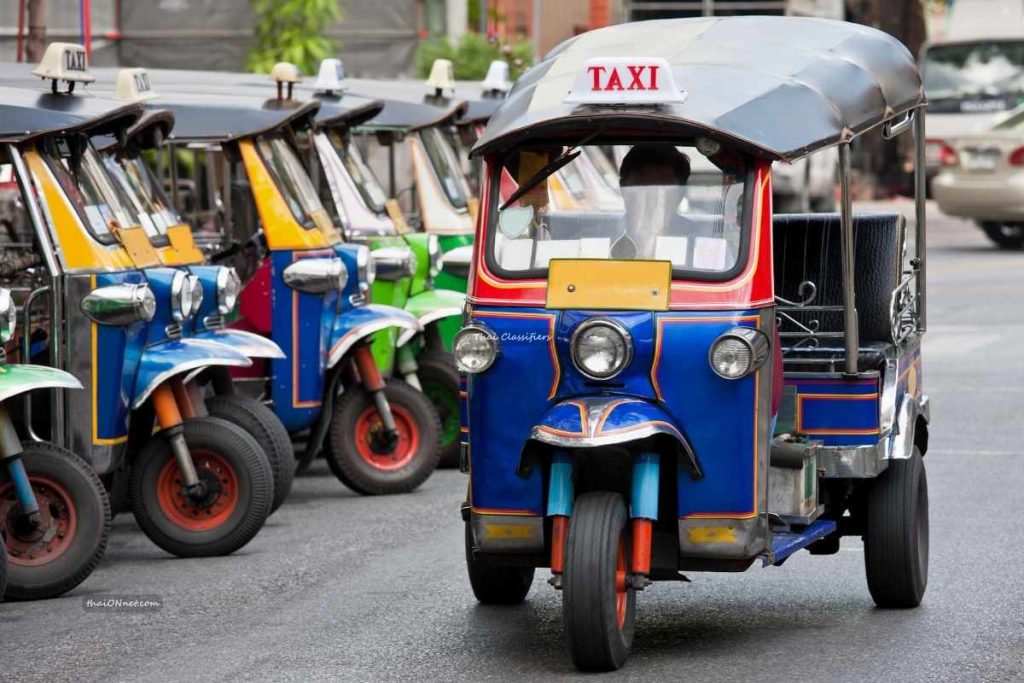
Examples:
รถหนึ่งคัน
Rot nueng khan.
One vehicle
รถยนต์สองคัน
Rot yon song khan.
Two cars
แท็กซี่สามคัน
Taxi sam khan.
Three taxis
จักรยานสี่คัน
Chakkrayan si khan.
Four bicycles
มอเตอร์ไซค์สองคัน
Motorcy song khan.
Two motorcycles
A useful question is:
มีรถกี่คันครับ
Mi rot ki khan khrap?
How many vehicles are there?
Using khan correctly is helpful when discussing transport, parking, rentals, and household vehicles.
Lem For Books And Certain Sharp Objects
The classifier:
เล่ม — lem
is most commonly learned as the classifier for books.
Examples:
หนังสือหนึ่งเล่ม
Nangsu nueng lem.
One book
หนังสือภาษาไทยสองเล่ม
Nangsu phasa Thai song lem.
Two Thai-language books
สมุดสามเล่ม
Samut sam lem.
Three notebooks
It can also classify some sharp or handled objects, but beginners can first remember it as the standard classifier for books and notebooks.
Question:
คุณมีหนังสือกี่เล่มครับ
Khun mi nangsu ki lem khrap?
How many books do you have?
Learning common noun-classifier pairs is often easier than memorising Thai classifiers separately.
Lang For Houses And Buildings
The classifier:
หลัง — lang
is commonly used for houses and some buildings.
Examples:
บ้านหนึ่งหลัง
Ban nueng lang.
One house
บ้านสองหลัง
Ban song lang.
Two houses
อาคารสามหลัง
Akhan sam lang.
Three buildings
Question:
มีบ้านกี่หลังคะ
Mi ban ki lang kha?
How many houses are there?
The word lang can also have other meanings in different contexts, but when it follows a number after a house or building, it functions as a classifier.
Khuat For Bottles
The classifier:
ขวด — khuat — bottle
is used when counting bottles.
Examples:
น้ำหนึ่งขวด
Nam nueng khuat.
One bottle of water
น้ำสองขวด
Nam song khuat.
Two bottles of water
นมสามขวด
Nom sam khuat.
Three bottles of milk
น้ำผลไม้สี่ขวด
Nam phonlamai si khuat.
Four bottles of fruit juice
Useful restaurant or shopping phrase:
ขอน้ำสองขวดครับ
Kho nam song khuat khrap.
Two bottles of water, please.
Some measurement words also function like Thai classifiers because they identify the container or unit being counted.
Kaeo For Glasses And Cups
The word:
แก้ว — kaeo — glass or cup
can classify drinks served in a glass or cup.
Examples:
กาแฟหนึ่งแก้ว
Kafae nueng kaeo.
One cup of coffee
น้ำสองแก้ว
Nam song kaeo.
Two glasses of water
ชาเย็นสามแก้ว
Cha yen sam kaeo.
Three glasses of Thai iced tea
Useful ordering phrase:
ขอกาแฟหนึ่งแก้วครับ
Kho kafae nueng kaeo khrap.
One cup of coffee, please.
Remember that the container word may change depending on whether you order a bottle, cup, bowl, plate, or bag.
Thuai For Bowls
The classifier or container word:
ถ้วย — thuai — bowl or small cup
is used for food served in a bowl.
Examples:
ข้าวต้มหนึ่งถ้วย
Khao tom nueng thuai.
One bowl of rice soup
ซุปสองถ้วย
Sup song thuai.
Two bowls of soup
ขนมสามถ้วย
Khanom sam thuai.
Three small bowls or cups of dessert
In restaurants, container words often provide more practical information than a general classifier.
Chan For Plates And Dishes
The word:
จาน — chan — plate or dish
is useful when counting plated food.
Examples:
ข้าวผัดหนึ่งจาน
Khao phat nueng chan.
One plate of fried rice
ผัดไทยสองจาน
Phat Thai song chan.
Two plates of Pad Thai
อาหารสามจาน
Ahaan sam chan.
Three dishes
Ordering phrase:
ขอผัดไทยสองจานครับ
Kho Phat Thai song chan khrap.
Two plates of Pad Thai, please.
Food containers and serving units are some of the most practical Thai classifiers for visitors.
Bai For Flat Items And Containers
The classifier:
ใบ — bai
has several uses. It commonly classifies bags, tickets, cards, leaves, cups, plates, hats, and some containers.
Examples:
กระเป๋าหนึ่งใบ
Krapao nueng bai.
One bag
ตั๋วสองใบ
Tua song bai.
Two tickets
บัตรสามใบ
Bat sam bai.
Three cards
หมวกหนึ่งใบ
Muak nueng bai.
One hat
Because bai is used across several everyday categories, it is one of the most valuable Thai classifiers to recognise.
Khu For Pairs
The classifier:
คู่ — khu — pair
is used for items naturally grouped in twos.
Examples:
รองเท้าหนึ่งคู่
Rong thao nueng khu.
One pair of shoes
ถุงเท้าสองคู่
Thung thao song khu.
Two pairs of socks
ตะเกียบสามคู่
Takiap sam khu.
Three pairs of chopsticks
สามีภรรยาหนึ่งคู่
Sami phanraya nueng khu.
One married couple
This form is useful when shopping for shoes, socks, gloves, and paired objects.
Khrueang For Machines And Appliances
The classifier:
เครื่อง — khrueang
is used for many machines, appliances, electrical devices, and instruments.
Examples:
คอมพิวเตอร์หนึ่งเครื่อง
Kh omphio toe nueng khrueang.
One computer
โทรศัพท์สองเครื่อง
Thorasap song khrueang.
Two phones
เครื่องซักผ้าสามเครื่อง
Khrueang sak pha sam khrueang.
Three washing machines
เครื่องปรับอากาศสองเครื่อง
Khrueang prap akat song khrueang.
Two air conditioners
Question:
มีคอมพิวเตอร์กี่เครื่องครับ
Mi khomphio toe ki khrueang khrap?
How many computers are there?
An As A General Classifier
A very useful general classifier is:
อัน — an
It can be used for many small objects, especially when the specific classifier is unknown or when speaking generally.
Examples:
อันหนึ่ง
An nueng.
One item
สองอัน
Song an.
Two items
เอาอันนี้ครับ
Ao an ni khrap.
I will take this one.
อันนั้นแพงเกินไปค่ะ
An nan phaeng koen pai kha.
That one is too expensive.
Although an is convenient, it should not replace every specific classifier. Still, it is one of the most helpful Thai classifiers for beginners who need to communicate before mastering every noun category.
Nueng Often Comes After The Classifier
With numbers above one, the normal order is:
Noun + number + classifier
หนังสือสองเล่ม
Nangsu song lem.
Two books
For one item, Thai may also place nueng after the classifier:
หนังสือเล่มหนึ่ง
Nangsu lem nueng.
One book
A certain book
Compare:
หนังสือหนึ่งเล่ม
Nangsu nueng lem.
One book, with emphasis on quantity
หนังสือเล่มหนึ่ง
Nangsu lem nueng.
A book or one particular book
Both structures are possible, but their emphasis can differ.
This is a more advanced feature of Thai classifiers, so beginners can initially use the straightforward noun-number-classifier pattern.
Using Classifiers With This And That
Thai commonly combines classifiers with:
นี้ — ni — this
นั้น — nan — that
The pattern is:
Noun + classifier + ni/nan
Examples:
หนังสือเล่มนี้
Nangsu lem ni.
This book
รถคันนั้น
Rot khan nan.
That vehicle
บ้านหลังนี้
Ban lang ni.
This house
เสื้อตัวนั้น
Suea tua nan.
That shirt
The classifier identifies the noun category, while ni or nan shows which item is being discussed.
This pattern is extremely common in natural Thai.
Saying “This One” And “That One”
When the noun is already known, it may be omitted.
Examples:
อันนี้
An ni.
This one
อันนั้น
An nan.
That one
With specific classifiers:
เล่มนี้
Lem ni.
This book or this volume
คันนั้น
Khan nan.
That vehicle
ตัวนี้
Tua ni.
This animal, shirt, or item using tua
Useful shopping phrases include:
อันนี้เท่าไหร่ครับ
An ni thao rai khrap?
How much is this one?
เอาอันนั้นค่ะ
Ao an nan kha.
I will take that one.
Asking “Which One?”
Use:
ไหน — nai — which
after the classifier.
Examples:
อันไหนครับ
An nai khrap?
Which one?
เล่มไหนคะ
Lem nai kha?
Which book?
คันไหนครับ
Khan nai khrap?
Which vehicle?
ตัวไหนคะ
Tua nai kha?
Which animal or item?
Complete examples:
คุณชอบเสื้อตัวไหนครับ
Khun chop suea tua nai khrap?
Which shirt do you like?
รถคันไหนของคุณคะ
Rot khan nai khong khun kha?
Which vehicle is yours?
This is another important use of Thai classifiers beyond basic counting.
Asking How Many
The standard pattern is:
Noun + ki + classifier
Examples:
หนังสือกี่เล่มครับ
Nangsu ki lem khrap?
How many books?
รถกี่คันคะ
Rot ki khan kha?
How many vehicles?
เด็กกี่คนครับ
Dek ki khon khrap?
How many children?
น้ำกี่ขวดคะ
Nam ki khuat kha?
How many bottles of water?
The answer uses the same classifier:
หนังสือสามเล่มครับ
Nangsu sam lem khrap.
Three books.
รถสองคันค่ะ
Rot song khan kha.
Two vehicles.
Learning each question together with its answer makes Thai classifiers easier to remember.
Ordering Food And Drinks
Useful examples include:
ขอน้ำหนึ่งขวดครับ
Kho nam nueng khuat khrap.
One bottle of water, please.
ขอกาแฟสองแก้วค่ะ
Kho kafae song kaeo kha.
Two cups of coffee, please.
ขอข้าวผัดสามจานครับ
Kho khao phat sam chan khrap.
Three plates of fried rice, please.
เอาไอศกรีมสองถ้วยค่ะ
Ao aisakrim song thuai kha.
I will take two cups of ice cream.
Container words may vary by restaurant and serving style, but these patterns are useful starting points.
Shopping With Classifiers
Useful shopping phrases include:
เสื้อตัวนี้เท่าไหร่ครับ
Suea tua ni thao rai khrap?
How much is this shirt?
มีไซซ์ใหญ่กว่านี้ไหมคะ
Mi sai yai kwa ni mai kha?
Do you have a larger size?
เอาสองตัวครับ
Ao song tua khrap.
I will take two.
ขอกระเป๋าหนึ่งใบค่ะ
Kho krapao nueng bai kha.
One bag, please.
รองเท้าคู่นี้สวยมาก
Rong thao khu ni suai mak.
This pair of shoes is very beautiful.
Using Thai classifiers in shopping conversations helps identify both the quantity and the exact object.
Booking Rooms
The classifier for rooms is:
ห้อง — hong
It can function as both the noun and counting unit.
Examples:
ห้องหนึ่งห้อง
Hong nueng hong.
One room
In natural situations, speakers usually say:
ขอหนึ่งห้องครับ
Kho nueng hong khrap.
One room, please.
ต้องการสองห้องค่ะ
Tongkan song hong kha.
We need two rooms.
Question:
ต้องการกี่ห้องครับ
Tongkan ki hong khrap?
How many rooms do you need?
Some nouns can also serve as their own classifier, which is another common feature of Thai classifiers.
Counting Days, Nights, And Times
Time units can function as classifiers or counting units.
วัน — wan — day
คืน — khuen — night
ครั้ง — khrang — time or occasion
ชั่วโมง — chua mong — hour
นาที — nathi — minute
Examples:
สามวัน
Sam wan.
Three days
สองคืน
Song khuen.
Two nights
ไปสองครั้ง
Pai song khrang.
Went twice
รอหนึ่งชั่วโมง
Ro nueng chua mong.
Wait one hour
ใช้เวลาสิบนาที
Chai wela sip nathi.
It takes ten minutes.
These forms do not always require an additional classifier because the measurement word itself supplies the counting unit.
Common Classifier Table
| Noun category | Thai classifier | Pronunciation | Example |
|---|---|---|---|
| People | คน | khon | เด็กสองคน — two children |
| Animals, clothes, tables | ตัว | tua | แมวสามตัว — three cats |
| Vehicles | คัน | khan | รถสองคัน — two vehicles |
| Books and notebooks | เล่ม | lem | หนังสือสามเล่ม — three books |
| Houses and buildings | หลัง | lang | บ้านสองหลัง — two houses |
| Bottles | ขวด | khuat | น้ำสองขวด — two bottles of water |
| Cups and glasses | แก้ว | kaeo | กาแฟสองแก้ว — two cups of coffee |
| Plates and dishes | จาน | chan | ข้าวผัดสองจาน — two plates of fried rice |
| Bags, tickets, cards | ใบ | bai | ตั๋วสองใบ — two tickets |
| Pairs | คู่ | khu | รองเท้าหนึ่งคู่ — one pair of shoes |
| Machines and devices | เครื่อง | khrueang | โทรศัพท์สองเครื่อง — two phones |
| General objects | อัน | an | ของสามอัน — three items |
This table covers many of the Thai classifiers beginners are most likely to hear.
What If You Do Not Know The Classifier?
For beginners, forgetting a classifier is normal.
You can try:
- Using an for a general object
- Pointing to the item
- Using the container or measurement word
- Asking a Thai speaker
- Repeating the noun and number clearly
Example:
เอาอันนี้สองอันครับ
Ao an ni song an khrap.
I will take two of these.
This may not be the perfect classifier for every object, but it can support communication.
It is better to speak with a general classifier than to avoid the sentence completely.
Learn Nouns Together With Their Classifiers
Instead of memorising:
รถ — rot — vehicle
and separately memorising:
คัน — khan
learn them as a pair:
รถหนึ่งคัน — rot nueng khan — one vehicle
Other useful pairs include:
คนหนึ่งคน — khon nueng khon — one person
แมวหนึ่งตัว — maew nueng tua — one cat
หนังสือหนึ่งเล่ม — nangsu nueng lem — one book
บ้านหนึ่งหลัง — ban nueng lang — one house
น้ำหนึ่งขวด — nam nueng khuat — one bottle of water
Learning complete pairs makes Thai classifiers easier to recall during real conversations.
Common Beginner Mistakes
Putting The Number Before The Noun
Thai normally uses:
Noun + number + classifier
Correct:
หนังสือสามเล่ม
Nangsu sam lem.
Leaving Out The Classifier In Careful Speech
The sentence may remain understandable, but the classifier usually makes the quantity clearer and more natural.
Using An For Everything
An is helpful, but common specific classifiers should gradually replace it.
Confusing The Noun And Classifier
Some classifiers resemble ordinary nouns or have several meanings. Focus on their position after the number or before ni, nan, and nai.
Forgetting The Classifier In Ki Questions
Correct:
รถกี่คัน
Rot ki khan?
How many vehicles?
Trying To Learn Every Classifier Immediately
There are many classifiers. Begin with the ones needed for daily activities.
Avoiding these mistakes helps learners use Thai classifiers more naturally.
A Simple Practice Method
Choose one noun:
หนังสือ — nangsu — book
Add one:
หนังสือหนึ่งเล่ม
Nangsu nueng lem.
One book
Add several:
หนังสือสามเล่ม
Nangsu sam lem.
Three books
Ask how many:
หนังสือกี่เล่มครับ
Nangsu ki lem khrap?
How many books?
Identify one:
หนังสือเล่มนี้
Nangsu lem ni.
This book
Ask which one:
หนังสือเล่มไหนครับ
Nangsu lem nai khrap?
Which book?
Practising these connected patterns shows that Thai classifiers are used for more than counting.
Essential Patterns To Remember
Noun + number + classifier
Count several items
Noun + classifier + ni
This specific item
Noun + classifier + nan
That specific item
Noun + classifier + nai
Which item?
Noun + ki + classifier
How many items?
Number + classifier
Quantity when the noun is already understood
Examples:
เอาสองอันครับ
Ao song an khrap.
I will take two.
มาสามคนค่ะ
Ma sam khon kha.
Three people came.
These structures cover many everyday uses of Thai classifiers.
👉 “Readers learning how Thai classifiers are used may also explore this beginner-friendly guide to Thai pronunciation and tones for clearer and more confident speaking practice.”
Conclusion
Thai classifiers are counting words used with people, animals, vehicles, books, buildings, food, drinks, clothes, machines, and many everyday objects.
The main beginner pattern is:
Noun + number + classifier
For example, nangsu sam lem means three books, while rot song khan means two vehicles.
Common Thai classifiers include khon for people, tua for animals and clothing, khan for vehicles, lem for books, lang for houses, bai for bags and tickets, and khrueang for machines and devices.
Container words such as khuat for bottles, kaeo for cups, and chan for plates are especially useful when ordering food and drinks.
Classifiers also appear with ni for this, nan for that, nai for which, and ki for how many. This means they help identify specific objects as well as count them.
Beginners do not need to memorise every possible classifier. Start with the forms connected to people, transport, food, shopping, books, clothing, and accommodation.
The easiest learning method is to memorise each noun together with its classifier and practise it in several patterns. With regular use, Thai classifiers will gradually become a natural part of everyday Thai speaking.
FAQ
What Are Thai Classifiers?
They are words used when counting or identifying nouns such as people, animals, books, vehicles, and objects.
What Is The Basic Classifier Pattern?
The common pattern is noun + number + classifier, such as rot song khan, meaning two vehicles.
Which Classifier Is Used For People?
Use khon, as in dek sam khon, meaning three children.
Which Classifier Is Used For Animals?
Use tua for many animals, as in maew song tua, meaning two cats.
Which Classifier Is Used For Vehicles?
Use khan, as in rot nueng khan, meaning one vehicle.
Which Classifier Is Used For Books?
Use lem, as in nangsu si lem, meaning four books.
How Do You Ask “How Many?” With A Classifier?
Use noun + ki + classifier, such as nangsu ki lem, meaning “How many books?”
How Do You Say “This One” In Thai?
A general form is an ni. A specific classifier may replace an, such as lem ni for this book.
Can Beginners Use An As A General Classifier?
Yes, an can help with many general objects, but learners should gradually study the correct common classifiers.
Must I Memorise Every Thai Classifier?
No. Begin with the most common classifiers and learn new ones together with the nouns you use regularly.